"VISION FOR ZIMBABWE!"

Here we invite Zimbabweans and all concerned friends of Zimbabwe to post their view directly! THE QUESTION IS... "WHAT, IN YOUR VIEW IS THE WAY FORWARD IN ZIMBABWE??????".....POST IDEAS TO mufarostig@gmail.com. THANK YOU!!!

LIONEL RITCHIE!!!

Loading...
Custom Search

UK Web Hosting

Snap Shots

Get Free Shots from Snap.com
Monitor page
for changes
    
   it's private  

by ChangeDetection

Map IP Address
Powered byIP2Location.com

Powered By
widgetmate.com
Sponsored By
Apply for Credit Cards

About Me

Tuesday, February 5, 2008

DEMO AT ZIM EMBASSY IN PRETORIA (29/01/2008)

www.zimdiasporavote.blogspot.com


Monday, December 10, 2007

GLOBAL ZIMBABWE FORUM: PRESS STATEMENT!!!


Monday 10th December 2007


The just ended historic first ever Zimbabwe Global Diaspora Conference has been hailed by many of its delegates and organisors as a huge success. The event was held at the Braamfontein Recreation Centre in Johannesburg, South Africa.

Over 150 delegates drawn from all over the Zimbabwe Diaspora community across the world attended the conference. These included delegates from such countries as the USA. UK, Canada, New Zealand, Japan, Botswana, Zimbabwe and South Africa, among other countries.

The keynote address was given by the conference’s guest speaker, Professor Ken Mufuka who is a veteran Zimbabwean academic based as the Lander University in South Carolina, in the USA.

There was also an array of inspirational papers on several topical issues affecting the 3-4 million Zimbabweans that are now living outside their homeland. These included among others speakers such as Grace Kwinjeh, Basildon Peta, Gabriel Shumba, Mandla-akhe Dube, Luke Zunga, Daniel Makina, Immanuel Hlabangana, Khethani Sibanda, Themba Shoniwa, Gardener Rusike, Tamuka Chirimambowa, Samukeliso Dube, Canaan Mhlanga, Violet Mariyacha, to mention but a few.

Solidarity messages were also received from several other speakers as Bishop Paul Verryn from the Johannesburg Central Methodist church and Patrick Baleni from the Western Sahara Solidarity Forum.

The conference also adopted several resolutions on the critical issues related to all Zimbabweans now living abroad.

These included among others the following issues:

The launch of the Zimbabwe Diaspora Development Chamber that is going to be registered in South Africa as an investment facility for all those interested in setting up their own viable companies.
The launch of the Zimbabwe Global Scholarship Fund to promote the human resources development capacity of all Zimbabweans now based in the Diaspora
The launch of the Zimbabwe Global Merit Awards that shall seek to appreciate and celebrate the efforts of all institutions and personalities that have consistently brought fame and dignity to the Zimbabwean nation especially within the Diaspora communities.
The launch of the first ever international network of all the Zimbabwean institutions and NGOs that are based in the Diaspora to be known as the Global Zimbabwe Forum. The new Forum is expected to set up its international Secretariat in Geneva, Switzerland.
An Interim Committee of the Forum was also set up for a year tenure and consists of the following persons:

Ms. Grace Kwinjeh – Chairperson
Mr. Mandla-akhe Dube – Vice Chairperson
Mr. Luke Zunga – Treasurer
Mr. Daniel Molokele – Co-ordinator
Ms. Violet Mariyacha – Committee Member
Mr. Canaan Mhlanga – Committee Member
Mr. Simbarashe Chimombe – Committee Member
Mr. Tamuka Chirimambowa – Committee Member


For more details, please feel free to contact the Global Zimbabwe Forum through Mr. Daniel Molokele on +27 72 947 4815 and Ms. Grace Kwinjeh on +27 79 434 4508


Mr. Daniel Molokele
South Africa
Cell. +27 72 947 4815
Fax. +27 86 691 6257
Website: www.danielmolokele.blogspot.com

"ZIMFINALPUSH 7" 2nd MASTER-ARCHIVE!!!

################ THE ZIMBABWE DIGEST ################

Rev Mufaro Stig Hove:
mufarostig@hushmail.com: skype> "zimfinalpush": cell: 0791463039 RSA
@@@@@@@@@@@@@@@@@@@@@@@@@@@


v v v v v v v v v v v v v v v v v v v v v v v v v v v v v v v v v v v v v v v v

Please go slowly down this site since it has numerous links to stories posted on the 31 other sites.
Don't miss each link!!
PLEASE GO SLOWLY UNTIL YOU REACH THE BOTTOM EACH TIME YOU VISIT!
"Together we will complete the change!"
Rev M S Hove.
#####################################


THE DIASPORA CSO FORUM GLOBAL CONFERENCE HAS BEEN SUCH AN INSPIRING SUCCESS!!

THE DIASPORA CSO FORUM GLOBAL CONFERENCE HAS BEEN SUCH AN INSPIRING SUCCESS!!
WE ARE PREPARING THE REPORTS! PLEASE CONTINUE CHECKING THESE SITES!!!
 

"ZIM UNDER SIEGE!" CRIES MUGABE'S PROPAGANDA MACHINERY
 
So Rev Nkululekho of the "Zimbabwe Democracy Now!" are the people putting up the billboards all over South Africa: Robben Island, Park Station, Musina etc!!!
CLICK HERE TO HEAR MORE ABOUT THEIR CAMPAIGNS!!!
@@@@@@@@@@@@@@@@@@@@@@@@@@@


GARIKAI CHIMUKA SAYS MUGABE MUST NOT FORGET HOW THE PEOPLE DECEIVED MUZOREWA!!


THE ECONOMIC SHARKS THAT THRIVE ON THE ZIMBABWEAN CRISIS>>> LINK JUST BELOW THIS PICTURE!!!

THE ECONOMIC SHARKS THAT THRIVE ON THE ZIMBABWEAN CRISIS>>> LINK JUST BELOW THIS PICTURE!!!
##############################
 

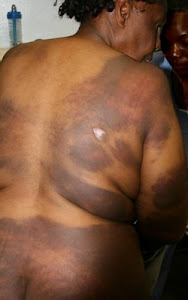
Lest we forget, Matibili/Mugabe's "degrees in violence!"


##########################################

##########################################
Mrs Sekai Holland (nee Hove)
 

Ms Grace Kwinjeh after the brutal attacks by Mugabe's thugs!
 

Mr Roy Bennett "Pachedu"..persecuted for changing allegiance from ZANU-PF to the MDC!
 

Engineer Elias Mudzuri
 
ENGINEER ELIAS MUDZURI, THE LEGITIMATE EXECUTIVE MAYOR OF HARARE AND THE ORGANISING SECRETARY OF THE MDC GIVES A DETAILED ANALYSIS OF THE STATE OF THE PARTY WITH MS VIOLET GONDA OF "SWRADIOAFRICA". DONT MISS THIS ONE!!!

LINK TO PART ONE (27/11/2007)!!!
LINK TO PART TWO (04/12/2007)!!!
***************************************************


What must Africa demand at the EU-AFRICA Summit? Which serious issues must not be overshadowed by the "Mugabe issue"?? Cde Hillary Kundishona asks.
 

MUGABE CARRIED BY THE MILLIONS.....
 

GARIKAYI CHIMUKA SAYS "SUNRISE 2 DOOMED TO FAIL!"

GARIKAYI CHIMUKA SAYS "SUNRISE 2 DOOMED TO FAIL!"
 

What we call Z$1000 today is actually Z$1000,000,000 (return the 6 zeros.)
 

PRESIDENT TSVANGIRAI GIVES "AL JAZEERA" WIDE-RANGING INTERVIEW AT THE COMMONWEALTH MEETING!


@@@@@@@@@@@@@@@@@

@@@@@@@@@@@@@@@@@
 

"WHY HAVE ANOTHER MAJOR POLITICAL PARTY?" MESSAGE SENT TO REV HOVE.


@@@@@@@@@@@@@@@

@@@@@@@@@@@@@@@
 

WHO ARE MARCHING IN HARARE???

Some simply say: "A MILLION MEN".
Others say "A MILLION HUNGRY MEN!
The best I heard was "A MILLION MORONS"!
Zvakaoma/Kunzima/Its tough!
***************************
 

Robert Matibili and Grace Marufu/Goreraza/Matibili
 

Time for meetings over....time for armed struggle....
 

"TIME FOR CONFERENCES OVER - TIME FOR ARMED STRUGGLE"

LINK!!!


%%%%%%%%%%%%%%%%%%%%%%


survival of the fittest...law of the jungle!

survival of the fittest...law of the jungle!
 

hero or villain?
 

SA POLICE COMMISSIONER JACOB "JACKIE" SELEBI : WHY IS MBEKI PROTECTING HIM??
 

LINK!!!!
@@@###@@@###@@@###@@@###@@@
 

Please listen to award-winning journalist Peta Thornycroft
 

@@@>>>PLEASE LISTEN AND READ THE TRANSCRIPTS!!<<<@@@


The gallant Dr Lovemore Madhuku, Chairman of the NCA.
 

<<<<<<<<<<<<<<<<<<<#############>>>>>>>>>>>>>>>>>>>>

The heroes that stood up to Robert Matibili's dictatorship definitely include Dr Lovemore Madhuku, Chairperson of the National Constitutional Assembly.
Mr Morgan Tsvangirai and whoever else should be very careful not to ignore and sideline these heroes whom they began with in this struggle.
President Thabo Mbeki should be extra careful if he ignores these legitimate calls for a New Constitution for Zimbabwe. We hear with disgust that the NCA demonstrators continue to be arrested, detained, persecuted, tortured etc.
We warn all involved in the treacherous SADC talks not to exclude the need for a NEW CONSTITUTION for ZIM.
Tsvangirai we have warned you!
Please kindly re-visit one of Dr Lovemore Madhuku's speeches about the fraudulent Zim Elections.
LINK!!!
REV M S Hove pp "ZVAKWANA / SOKWANELE!"
>>******************************************<<
 

LOVE HIM OR HATE HIM?? PROF THE HON JONATHAN MOYO, MP.
 

##########################

##########################
CDE SIMON MUDEKWA, PRESIDENT OF THE ZIMBABWE REVOLUTIONARY YOUTH MOVEMENT SPEAKS TO MANDISA OF "SWRADIOAFRICA" (20/11/2007)
 

@@@###@@@###@@@###@@@


About the late Ian Douglas Smith...


"We cannot mourn that killer," says Zambia's founding President, KK.
 
I said to someone this morning, "The main blunder Ian Smith made was to delay the liberation of Zim until dictators like Mugabe rose up." The reply was, "How do you explain Malawi's Banda, Zaire's Mobutu Sesse Seko, etc etc?"
I had no reply!
How could I explain the Malawi butcher "The Ngwazi" who literally threw his "opponents" into crocodile-infested rivers alive? How is his student, Robert Matibili, (also a Malawian) different? Had Dr Hasings Kamuzu Banda got his country through an armed struggle (since we explain away Matibili's style using that excuse)? What about Mobutu? How do we explain him?
Well, a white Smith has fallen but the black Smith is still around and wants to continue another five years. Various other formations cannot unite to remove him democratically!
No, we are not mourning Ian Douglas Smith... we are busy suffering and wondering when the black Dictator will fall! Ian Smith's death is a non-event...wait for the real thing when Robert Matibili passes away!
Unfortunately the world watches with a binoculars from afar as if its all a sweet game of chess!
CRY THE BELOVED ZIMBABWE.
Rev Mufaro Stig Hove..."THE ZIMBABWE DIGEST!"
###
############################


Rev Hove at a demo in South Africa. Mugabe must not get consolation from the problems afflicting the MDC.
 

1. How does Mr Tsvangirai hope to get into power without reconciling with the other "chunk" that left with Welshman Ncube and Arthur Mutambara? 2. How does Tsvangirai hope to build confidence in the Electorate when he cannot sit down with Ms Lucia Matibenga and, at least, solve that issue once and for all? 3. What exactly is Morgan up to? Is he serious about "dislodging" ZANU-PF??? WHO HAS THE ANSWERS???
 

A VERY DETAILED LOOK AT THE FAILURE OF TSVANGIRAI TO STOP THE VIOLENCE IN HIS CAMP!


Mugabe wins.....ask Stanley Goreraza!


########################################

"Zimfinalpush" has been in existence since October, 2006. Its main objective is to expose all the problems besetting Zimbabwe.
"Zimfinalpush" recognizes that Zimbabwe itself is bigger than Robert Mugabe, Morgan Tsvangirai, Lovemore Madhuku, Arthur Mutambara and all of us combined.
We appreciate that Zimbabwe will go on after all of us are all gone. It is in that light that we recommend that whoever wants to try and bring sanity to the Zim mess do so from an honest position.
The blogger's full contact details are available at www.zimfinalpush6.blogspot.com

###################################
 
SA MUST NOT HOST 2010 WORLD CUP IF THEY SUPPORT MUGABE!!!
Enter your name:

Display as "Anonymous"
Click here to read this petition.
Newest 20 of 84 signatures
84
Roni L
12/9
83
Anonymous
12/9
82
jack meoff
12/6
81
sinikiwe dube
12/5
80
Tonny Nare
12/4
79
Donnah M .Mugoni
12/4
78
gushungo assassinated
12/4
77
Anonymous
12/3
76
Anonymous
12/3
75
angela smith
12/2
74
An Other
12/1
73
Anonymous
12/1
72
jimmy angelilli
11/28
71
Masautso Phiri
11/28
70
Kana Mwana wevhu
11/28
69
mafukidze k
11/25
68
Grace Penlain
11/24
67
Anonymous
11/23
66
Jacob Zuma
11/22
65
Chatunga Matibiri Mugabe
11/22
Petition powered by ThePetitionSite.com
 

Don't miss Mandebvu's weekly broadcasts about Zim!
 

YOU CAN PLAY THE PROGRAMME YOU WANT TO LISTEN TO...


Tuesday, November 20, 2007

Dear Mr Morgan Tsvangirai,


Open letter to Tsvangirai on deal with Zanu PF


By Farai Mtshaka.


Dear Sir,


The following is a quotation from the Newzimbabwe.com of the 11/08/2007:


gMDC officials have privately said they are not sure how ZANU PF hopes the opposition party can influence western nations to lift purportedly gtargetedh sanctions against President Robert Mugabe and his officialsh gWe now wait to hear what exactly they want us to help with on the issue, since they put the item on the agenda.h


The MDC has repeatedly stated with indisputable justification that it does not have proprietary obligations over the sanctions issue, and I for one believe this to be true. It is therefore entirely up to Washington, the Brits, the Canadians, the Australians etc. to decide on the matter. That said, I also see an opportunity for the MDC to leverage its negotiating position.


As ZANU PF is so desperate to have the sanctions lifted, the principle of quid-pro-quo should apply here as well without exception, seeing as we do that they (ZANU PF) are concerned in the least about the well-being of Zimbabwean people. They seem obsessed with self-preservation and the love of power. Meanwhile, unmitigated state sponsored violence has become a permanent feature of ZANU PFfs survival strategy.


Political fundamentalism has driven Zimbabwe into the diabolical mess which the country is in today. Worse still, ZANU PFfs egalitarian obsessions about land redistribution and indigenisation have become a time wasting irrelevance as the economy continues to implode.


The MDC strategy on this issue ought to be framed around prudence and readiness to support genuine efforts to have the sanctions lifted, provided ZANU PF agrees to a robust economic recovery programme, underpinned by a sound regulatory framework and enabling economic policies. Nothing short of a bold approach would succeed in kick-starting the moribund economy. It is in my view simplistic and narrow-minded to see the sanctions issue in isolation.


In conjunction with the sanctions issue, we should be talking about how we recover the economy in the immediate term to long term. Zimbabwean people have suffered enough! Lifting sanctions alone will do little for the economy at this stage as long as the Government does not implement the rule of law, good governance and sound economic policies. Nonetheless, I would like to believe that these issues have already been covered in the discussions already undertaken by the two parties under the auspices of the SADC initiative.


With the approval of the 18th Amendment to the constitution already a done deal, there is slender possibility that ZANU PF will agree to further demands to hold the forthcoming elections under a constitution. As always, they will duck and dodge the issue in the full knowledge that it is not to their advantage to contest the forthcoming elections under a new democratic constitution. In all probability, they would prefer to buy time until the economy has begun to show signs of recovery and the public hostility towards the party has subdued to palatable levels.


On the other hand, it must be stated without equivocation and ambiguity that the MDC has dismally failed to hold the ZANU PF to account for mismanaging the economy. The generality of the Zimbabwean people, while remaining sceptical about the cause-and-effect relationship between the so called sanctions and the current economic meltdown, appear to have bought into the presumption that ZANU PF is not entirely to blame, but rather externally driven prescriptions for solving our problems, ostensibly supported by an unscrupulous opposition pushing the regime change agenda.


Naturally, the electorate expected a forthright attribution of responsibilities from the MDC as the principal opposition party. Consequently, the electoral prospects of the MDC have become just as fickle and tentative as those of the ruling ZANU PF. By all accounts, it is almost inconceivable for the MDC to wrestle power from ZANU PF at this stage through the ballot box. The splintering of the MDC into two formations has no doubt worsened the situation going into the elections.


Recent press reports about the internal power struggles in MDC have created the distinct impression of a party irretrievably mired in internecine squabbles of one kind or another. The party has failed to inspire lasting confidence among sceptical Zimbabweans.


If I were to hazard a guess about the outcome of the forthcoming elections, I would say that at best, the MDC could win any where between 84 and 94 seats in Parliament (40-45%) and perhaps much less in the Senate where the party could manage any where between 25 and 35 seats. The unpalatable reality is that the MDC leadership has failed to establish a confidence building platform that would place the party firmly on the trajectory to electoral victory.

There is urgent need to address some of the fundamental flaws in the partyfs command structure. Transformative organisational changes within the party are needed as a matter of urgency.


Be that as it may, the MDC needs to be forward looking in its strategy. I am convinced beyond doubt that at this point, the MDC should begin to explore the prospect for a government of national unity with ZANU PF on two conditions; the first being that ZANU FP agrees to another amendment to the constitution creating the post of a Titular President and an Executive Prime minister, with the ostensible aim to get Mugabe out of the way. This should be a condition sine-qua-non for actively campaigning for the lifting of sanctions by the West.


Mugabe should be offered the post of Titular President in the Government of national unity if he is re-elected by popular mandate, while parliament would elect an executive Prime Minister. Under this scenario, ministerial posts would be shared proportionally between the MDC and ZANU PF. Most importantly, however, the government of national unity ought to have as its core objective the recovery of the economy, the implementation of which should be agreed by both parties before the elections. The MDC would insist on taking charge of key ministries such home affairs, justice and finance.


In order to enable full economic recovery and national healing, the duration of the government of national unity would be limited to the life of the next parliament. A government of national unity can undoubtedly enhance the strategic integrity of an economic recovery programme characterised by the absence of Mugabe from the day-to-day management of the state, thus facilitating the lifting of sanctions by the West. It should be understood by both the MDC and ZANU PF that sanctions will never be lifted while Mugabe remains at the helm of Government, whatever the circumstances.


The advantage of this approach (government of national unity), is essentially that it would allow Mugabe to side-step the succession issue within his party albeit temporarily, while enabling the MDC to play an important role in the governance of the country over the next five years, thereby raising its profile in and outside Zimbabwe.


To be sure, what I am proposing bears no resemblance whatsoever to what was offered to Joshua NKomo back in 1987. Under my proposal, neither the MDC nor ZANU PF would be obliged to subordinate their ideological affinity or political identity. The two parties would simply agree to co-habit over the next five years for the good of the nation. This is how Belgium has managed survive as a nation state for over last 150 years.

Once ZANU PF agrees to a comprehensive economic recovery programme and commits to bring about the rule of law and allow these platforms to be implemented by a government of national unity, I see no reason why the MDC would not agree to campaign for the lifting of sanctions after next yearfs elections.


Sent from Yahoo! - a smarter inbox.

Sunday, December 9, 2007

To what extent is official patriotism a threat to Britain’s paradigm shift in Zimbabwe foreign policy?


by Hillary Kundishora

Patriotism has been a strategic response used by Post-colonial governments, whose legality and legitimacy is under threat from the opposition or political contestants. Zimbabwe is an inescapable case of an abuse of official patriotism, which raises ethical connotations, because the patriotism implies that “Motherland” however defined is a moral value or moral standard.

Official patriotism is an extreme belief because it implies that citizens should place the interests of the nation above their personal and group interests, and this sacrifice may extend to their own life (some kind of unethical and immoral blindness). From the days of Hitler to this day, troubled political parties and greedy individuals have used patriotism to hoodwink people because if patriotism is something modelled like nationalism, it raises morale and “mental blindness”.

After defining the threats that are posed by a certain political party, group of people, individuals and nations to the government, people are then hoodwinked to believe that they are in a state of war, which then justifies an illegal and un-announced state of emmergency. This would then make it permissible for people to fall over each other in surrendering their rights and strategic interests to the government in order to protect and fortify false national interests.

Leadership contestations will then be seen as rebelling against the "commander of the revolution"(Robert Mugabe) and in fact an anathema, because the ostensibly "spiritually-connected" leaders must be given a chance to drive the nation to a state of safety, which is never real, but just an illusion.

This was the base of fascism and racism during the time of Hitler. People were killed in thousands, (if not millions), economies run down, people beaten and torched to death in the name of "patriotism". All the catastrophic human losses, including welfare losses were then treated as collateral damage, a military term which does not clearly define the loss sufficient to justify a mission, a euphemism for rallying soldiers even for an immoral and unethical war.

People in Zimbabwe are being abused through propaganda appeals, which raise patriotic emotions, so that they continuously think that the “motherland” is under attack and the enemies are the MDC, EU, Britain, USA and Australia. A form of change in leadership is viewed as a direct ambivalent action to authority, not tolerated because the strategic interests of people are under threat, and anyone who dares raise the issue invites patriotic inspired scorn, if not death.

The lessons from the intensity of official patriotism in Zimbabwe are that it is a dangerous strategic instrument and those propagating it are in fact more dangerous to the people because it is used to abuse citizens, hurt them, kill them, torch their belongings and rape them, all in the name of sovereignty and affirmation to the motherland. The patriotic appeals to citizens are used to raise patriotic emotions in attacking political opponents and implicitly accusing them of betraying or “selling” the country.

The dilemma is that the opposition elements in Zimbabwe have failed to read the radar, on circumstances that play well in the hands of this dictatorial tool, possibly because the patriotic vacuum has already been “filled and privatized”, thus to some extent they then reject patriotic loyalty and pride because they feel excluded from the "national project" and see no reason to be proud of it. Dictators since time immemorial have abused patriotism to gain illegitimate and illegal reign over nations and Zimbabwe’s case is no exception.

Since the EU-Africa summit has occurred, with Zimbabwe’s attendance having dominated the pre-summit debate we should ask ourselves: “To what extent are we threatened by official patriotism?" Given that official patriotism in post-colonial Zimbabwe has been based on the purported threat to our sovereignty and nation, in this case from Prime Minister Brown (formerly from Prime Minister Blair). “To what extent are we caught in a patriotic paradox?"

My thesis is that after UK’s Prime Minister Gordon Brown has insisted that he cannot locate global issues outside personalities by preferring to stay away from a strategic global event for the sake of the attendance by Zimbabwe’s President Robert Mugabe,I have questioned myself: “What is it that is informing this nonsensical behaviour?”, “What is the sense in all this public circus and nonsense?”

I have arrived at the understanding that Prime Minister Gordon Brown’s actions can be summed up in a proverbial statement, “ Gordon Brown has thrown away the bath water together with the baby”.

The actions of Prime Minister Gordon Brown herald a new era of the escalation of the political stalemate. An attendance of the summit by him as the most senior representative of Britain would have symbolised seriousness and would have helped the summit meet its goal of building strategic partnerships between EU and Africa.

His sacrifice reflects a paradigm shift in the foreign policy in relation to the treatment they will offer to the Mugabe government. The sense in the Briton’s action is that there is more pressure coming, more sanctions to come and obviously new ways of directly confronting President Mugabe and his government.

What is at play is intense official patriotism, which has been used to justify foregoing important issues in order to achieve strategic goals for both leaders. Like soldiers in a war, Prime Minister Brown and President Mugabe are now caught up in a patriotic paradox, both acting within their strategic interests, with President Mugabe trying to muscle his way in his quest for life power retention and self-preservation while on the other hand Prime Minister Brown is trying to block President Mugabe’s unquenched appetite for power.

The celebration of a new democratic era in post-colonial Zimbabwe entails shattering and demystifying this patriotic myth and script. This gives a mammoth task to the opposition in Zimbabwe to continuously post an image of itself, in a nationalistic outlook in order to avoid falling prey to official patriotism (especially now towards elections) because war cries are already now being loudly heard: "The motherland is in danger!!” and this being a dictator's plea for citizenry patriotic emotions.

Hillary Kundishora is Scholar of Strategic management. He can be contacted on hkundishora@yahoo.co.uk

Monday, December 3, 2007

Why Another Major Political Party in Zimbabwe?


Read the ZPDP National Unity Policy

Visit our website today:
www.zpdp.org
 
###############################################
 

The case for another major political player in Zimbabwe is now more apparent than ever. The ruling ZANU PF party has completely failed to reform itself. The opposition MDC has equally failed to live up to the high expectations of the people of Zimbabwe who had embraced the party at its formation.

The most disturbing prospect is that a political vacuum will definitely be created especially after the forth coming harmonised elections in March 2008. If the result goes either way the effect will be the same: a political vacuum will ensue.

For example, a ZANU PF victory no matter how unlikely it may appear, will definitely throw the MDC party into political oblivion. This is because the MDC's history is littered with non-achievements as well as near-achievements, and the people of Zimbabwe will want to see this as the last chance for the party to redeem itself. Failure to secure victory will not be met with another chance but that will be the natural death of the MDC.

Similarly, an MDC victory will still create that dangerous vacuum because the ruling ZANU PF is now too damaged and discredited to step into the shoes of the opposition MDC. What government would want to take lessons from an opposition ZANU PF that it itself has presided over the destruction of the country. Another major political party will therefore need to come in the picture.

An ideal situation for Zimbabwe in March 2008 would be a ZPDP victory because what our party represents is untainted with political scandals such as those of the ruling ZANU PF, nor are we being dogged by the crises of inadequate and nepotistic tag of the MDC. That is why our party is down to serious business that includes an ambitious outreach programme that is has never been witnessed before, and the rolling out of some of the more exhaustive policies any Zimbabwean political party has ever come up with. We will not leave anything to chance because we are in this to win it for Zimbabweans.

But while most people agree that there is need for another major political player in Zimbabwe they do not seem to quite agree as to when such a party should be incepted. Others want to wait until after the elections for the party to be formed but that will be too late. Encouragingly, there is a large progressive section of the population that strongly feels that this is the right time for a new major political player to come on board and this is why the ZPDP has been launched.

Another very important aspect is that the ruling ZANU PF and the MDC are two parties that seek to draw their guiding principles from very narrow concepts that leave out a significant number of Zimbabweans outside those narrow concepts. ZANU PF in premised on the notion of the liberation history of the country while the MDC is anchored on Trade Unionism, yet there are so many other attributes that Zimbabweans can be identified with.

ZANU PF's manipulation of the liberation war history has resulted in the distortion of that very important aspect of our national history because some people have resorted to cheating and misleadingly associating themselves with the war era so as to qualify to meet the ZANU PF criteria for participation in the national activities.
Equally so, those who are not of trade union or labour movement background have failed to cut it with the MDC because the party has overemphasised that concept as the dream ticket to the MDC party.

The net result of that narrowness of appeal by the existing two major political parties in Zimbabwe is the unfortunate disenfranchisement of a large section of the Zimbabwean population. For example, not everyone fought in the war, or not everyone fought alongside each other. Some people did not fight in the war, and those who did, were not necessarily alongside each other. There are also young Zimbabweans who were born well after the war who are now old enough youth to participate in the politics of their country. These are neither members of any trade union organisation, or veterans of any war, but they are ordinary Zimbabweans.

The ZPDP has realised the anomalies in our political system and is putting forward a much more comprehensive political project that has a broader appeal to, and identifies with all Zimbabweans. Our common factor is Zimbabwean citizenship. We are a party for all Zimbabweans with no eyes for race, colour, sex or sexual orientation, religion and tribe. The only credential for admission into the ZPDP is being a Zimbabwean.

For all those progressive minded Zimbabweans who would like to be part of the historic transformation of the politics of our great nation, this is the time to join hands and play an active part. We all have to work together for the good of our motherland. Let's not allow anything to come between us as a people. Let us all stand up for each other and protect one another. Let us fight for our nationhood, and defend our values, the values of freedom and democracy that we achieved through unity of purpose.

We are stronger together.


Ms. Isabel Shanangurai Madangure

President, Zimbabwe People's Democratic Party (ZPDP)


Wednesday, November 28, 2007

THE ZIMBABWE DIASPORA FORUM:GLOBAL DIASPORA CONFERENCE: PROGRMME!!!


BROTHER DANIEL MOLOKELE, CHAIRMAN OF THE ZIMBABWE DIASPORA CSO FORUM: WEBSITE: www.danielmolokele.blogspot.com

WEBSITE OF CSO FORUM: www.zimcsoforum.org


“Building a Lasting Legacy!”


7 – 9th December 2007

Johannesburg, South Africa


CONFERENCE PROGRAMME


DAY ONE

FRIDAY 7th DECEMBER 2007

SESSION ONE – Mr. SOLOMON CHIKOHWERO

14.30 –17.30 Accreditation of Participants & Introductions

17.30 – 17.45 Welcome & Opening Remarks

Ms. Nora Tapiwa

17.45 – 18.00 An Introduction to the Zimbabwe Diaspora Forum

Zimbabwe Development Chamber

Global Zimbabwe

Mr. Luke Zunga


18.00 – 18.15 Background to Global Diaspora Conference

Mr. Daniel Molokele


18.15 – 19.00 Key Note Address

Building a Lasting Legacy: The Role of the Diaspora in the

Development Future of Zimbabwe

Prof. Ken Mufuka

(Lander University, USA)


19.00 – 20.00 Dinner & Entertainment


DAY TWO


SESSION TWO – Prof. DANIEL MAKINA

07.30 - .08.30 Breakfast & Accreditation

08.30 – 09.00 Recap. of Previous Day’s Session

09.00 – 10.30 Thematic Presentations

09.00 – 09.30 Business and Economic Issues


Civic Society Engineering Economic Development

Luke Dzipange Zunga

African Consciousness & Unity as the Engine to Vehicle

African Economic Emancipation

Golden Nyambuya

Financial Sector Regulation: Zimbabwe’s Case

Gardner Rusike

Economic Issues Affecting the Diaspora

Tamuka Chirimambowa


09.30 – 10.00 – Citizenship and Political Participation


Zimbabwe-Dangers of elite deal making lessons from Kenya

& South Africa by Grace Kwinjeh

Role of Diaspora in Their Host Country (Policy Influence)

Immanuel Hlabangana


To Protest or Not –Zimbabweans’ Willingness to Protest

Glen Mpani


10.00 – 10.30 Media Issues and Freedom of Expression

Freedom of Expression & Mass Media

Prof. Stan Mukasa

Deregulated Mass Media NZ Experience by

Madhla-Akhe Dube

How the Media Failed Zimbabweans-the truth the biggest casualty

Japhet Ncube


Challenges of Freedom of Expression in Zimbabwe

Basildon Peta


10.30 – 11.00 TEA BREAK


SESSION THREE – Mr. MANDLA-AKHE DUBE


11.00 – 11.30 Constitutional and Human Rights Issues

Issues at Stake for the Diaspora Community

Judge Michael Majuru

Tyranny, Terror & Torture in Zimbabwe: Some Mechanisms for

Redress

Gabriel Shumba

Human Rights Issues

Gorden Moyo

11.30 – 12.00 Diaspora and Migration Issues

Migration & the Role of the Diaspora

Prof. Daniel Makina

Citizenship & Identity Themes

Dr. Bhekinkosi Moyo

12.00 – 12.30 Education, Culture & Recreational Issues

Rebuilding National Institutions

Dr. Temba Shonhiwa


The Key Educational Issues Affecting the Diaspora

Doctor Ncube

American Education Opportunities at Lander University

Prof. Ken Mufuka

12.30 – 13.00 Women, Youth and Gender Issues


Youth Empowerment

Godfrey Zviripi


Role of the Youth in Future of Zimbabwe

Simon Mudekwa


Women’s Health & Gender Violence

Valerie Tagwira

13.00 – 14.00 LUNCH BREAK


14.00 – 14.30 Social Welfare and Faith Based Issues

Distance Caring for Those in the Diaspora

Joyce Mpofu

The Role of the in Issues Faith/Youth/Social Welfare in the Struggle

for a democratic Zimbabwe by

Khethani Sibanda


Challenges Faced by Ordinary Refugees

Sibanengi Dube

14.30 – 15.00 Health and HIV and Aids Issues


Dr Samukeliso Dube

Bhutholezwe Nyathi


15.00 – 15.30 TEA BREAK

SESSION FOUR – Ms. VIOLET MARIYACHA

15.30 – 16.00 Various and Solidarity Messages

Mr. John Spicer, Seeff Properties

Western Solidarity Forum

Zimbabwe Solidarity Forum

Ms. Caroline Ncube, UCT

Dr. Charles Goredema, ISS

16.00 – 16.45 Thematic Group Discussions


16.45 – 17.00 Closing Remarks and Announcements

Ms. Nora Tapiwa


18.00 – 20.00 Dinner and Entertainment

DAY THREE

SUNDAY 9th DECEMBER 2007


SESSION FIVE – Mr. LUKE DZIPANGE ZUNGA


07.00 – 08.30 Breakfast & Accreditation

08:30 – 08:45 Recap of Previous Day’s Deliberations

08.45 – 10: 00 Thematic Group Discussions

10:00 – 10:30 TEA BREAK

10:30 – 12:30 Thematic Group Presentations

12:30 – 13:30 LUNCH BREAK

SESSION SIX– PROF. KEN MUFUKA

13:30 – 15.30 Launch of Global Zimbabwe

15:30 – 16:00 Adoption of Resolutions & Way Forward

16:00 – 16:15 Closing Remarks

Gorden Moyo

16:15 – 16.30 Vote of Thanks

Mr. Lovemore Fuyane


16.30 – 17.00 Press Conference


@@@@@@@@@@@@@@@@@@@@@@@@@@@@@@@@@@@@@@@@@@@@@@@@@@@@

FOR THE PRESS STATEMENT ISSUED AFTER THE CONFERENCE, PLEASE CLICK HERE!!!!

Friday, November 23, 2007

PROF JONATHAN MOYO: "WAY FORWARD IN ZIM!"


I, Rev Mufaro Stig Hove, in October, 2006 wrote Prof Jonathan Moyo and asked him what the way forward was for Zimbabwe.

The link for the original posting is at http://zimfinalpush1.blogspot.com/2006_10_01_archive.html (20/10/2006)

Below is his brief reply which apparently still holds true:

##################################################

Thank you for your message.

Regarding your question on the way forward in our country, I am very tempted to do a comprehensive and detailed strategic response and yet I also realize that doing so in an open forum like this would provide an evil opportunity to some mischief makers in our midst to undermine the suggested way forward before it even gets a chance to takeoff.

We now should learn that some things are better left unsaid or are said in very confined forums away from the public glare. In other words, instead of writing or talking about what is to be done, we should now just do it. We need to start acting with a common purpose in a determined and single minded fashion.

One thing I would like to say here though is that there will be no way forward in Zimbabwe unless those leading it make it possible for many who have been in Zanu PF either as leaders or members or supporters to find meaning, purpose and action in opposition ranks.

In the end, what will happen in Zimbabwe in the very near future will be driven either by an internal process of transformation within Zanu PF or by a split in Zanu PF which would lead to the formation of a new and more vibrant opposition movement with strong nationalist credentials and connections with Zimbabwe’s independence movement including strong rural networks.

Anything else will remain wishful thinking that will never grow the opposition into a government. But of course, I realize that only time will tell. I wish I could say more but as I have indicated that would be counterproductive. I hope what I have said provides sufficient pointers and does some justice to your question.

Best regards.

Professor Jonathan Moyo.

PROF MOYO's WEBSITE!!

Friday, October 19, 2007

To hell with SADC and the African Union!!


by Tanonoka Joseph Whande

In every generation, there comes a time when a nation just has to stop and reflect; a time when people of conscience choose to suffer injustice rather than to contribute to it. There always comes a time when nationals pause to confront themselves and decide whether to continue on the path they are traveling or change course.

In every generation, there comes a time when a people must chivalrously harden their consciences and accept that pain, discomfort and hardship are unavoidable components of the process of banishing pain, discomfort and hardship from the midst of their very own existence.

Although, during the last century, Zimbabweans have always been oppressed and ill treated by successive governments, especially the current and only black government we have ever known, Zimbabweans are, by nature, peace loving people who have sacrificed so much.

Our current government has already proved to be more brutal than any other before it.

And yet in every generation, there comes a time when citizens, as individual members of a nation, must stop and enter into deep introspection. Another fake election looms and we are, once again, being asked to legitimize electoral fraud by participating in the farce.

It is time for Zimbabweans to decide.

The so-called smart sanctions are an insult. Mugabe and his goons deserve full-blown sanctions and effective isolation. Targeted ZANU-PF culprits always scavenge for diplomatic loopholes and travel at will.

I wish there were a way of keeping all Zimbabwean aircraft confined to Zimbabwean air space if not completely grounded. Why should those who got Zimbabwe into the mess it is in be allowed to go up for air and take expensive tea-breaks by globe-trotting while the innocent, deprived, chain-ganged sufferers suffocate as they desperately try to hold the crumbling nation together?

Several times over the years, the Congress of South African Trade Unions (COSATU) threatened to blockade our borders. I think they really should seriously consider this action. Painful? You bet! But to save a drowning person, is it not necessary to jump into the same waters as the drowning victim?

To hell with smart sanctions; blockade the damn borders and get it over with! What could possibly cause us more pain, discomfort and hardship than what we are already being subjected to by this government?

Because of their failures, Mugabe and his ZANU-PF cronies have turned their anxieties into paranoia. They are highly suspicious of innocent citizens and see crowds of enemies behind every telephone pole.

2007 is coming to an end and Zimbabweans are still captives in their own country. We are still not a free people. We literally live from handout to mouth. We cry for jobs. Good education. For freedom. We cry for food in a country that used to feed Africa.

Not only did Mugabe and his party betray us, even individual members of the opposition now appear to worry more about their own survival than be concerned about the people.

We were betrayed and it is time for Zimbabweans to make a decision. Zimbabweans are always asked to collectively weigh the disadvantages of life against the advantages of death.

How unfortunate!

We watch as our government does pretty much as they please at the expense of the people. Public funds are being abused and stolen. Mugabe and his cabinet ministers are looting land and corporations, just in case something untoward happens at the polls. Our freedoms are now toilet paper thin yet Mugabe keeps gnawing at the little coating that remains.

Pleading sense from these people is like trying to read a newspaper in high wind.
God made us custodians of our individual lives and it is our responsibility to protect ourselves as God’s proxies. So who are we to keep quiet and remain uninvolved when such physical, spiritual and mental inconsistencies and atrocities are rained on the innocents of Zimbabwe?

The time to harden our resolve has come. We are unwell, hungry, jobless and abused on a daily basis. But the president pops up on TV and, instead of wiping the gloom and the tears off our faces, he tells the world, and even us sufferers, that we are all happy and all is well. Of course, denial is a classic symptom of unhealthy rage.
Look at the violence we instigate and perpetrate against ourselves on behalf of Mugabe who has clearly harnessed criminal elements and called them ‘war veterans’!

No war veteran who valued life enough to fight in the war of liberation and experienced the unfairness of life would ever want to see Zimbabwe at war again. Belligerence is now masking our despair and hopelessness.

The leadership in Zimbabwe is teaching our children and us to hate people we don’t even know. Mugabe blames his failures on people who have never addressed a meeting in the country. He has turned state funerals into verbal war zones where he hurls insults at people at home and abroad.

Independent thinking is under assault; and when one dares to express themselves freely, they are declared an enemy of the state, a marionette stimulated by some imagined puppet-master in some foreign land. Journalists and academics are being targeted.

I blame Robert Mugabe not Gordon Brown. I blame our kin, Thabo Mbeki, not George W. Bush.

We are forced to put our faith in Africa’s leaders who think nothing of human rights and collectively plunder their nations, killing and imprisoning journalists, intellectuals and those who do not support them.

SADC and the African Union have led Zimbabweans into the slaughterhouse. In spite of a string of previous failures in such matters, SADC, that group of short-sighted leaders, recently asked Thabo Mbeki to mediate in the Zimbabwean issue again. This after being fired by political opponents in the Ivory Coast for taking sides during mediation.

And just this past Tuesday, Mbeki was at it again.

Burundi’s last active rebel group boycotted a meeting to put the derailed peace process back on track because, the rebel group said, “the South African mediator is biased” and by so doing “had disqualified himself as a mediator.”

During South Africa’s mediation talks, the government of Burundi continues to physically attack supporters of the group with which it is engaged in peace talks. Over the past weekend, Nelson Chamisa, spokesperson of Zimbabwe’s Movement for Democratic Change charged that their supporters were being attacked and some killed by Mugabe’s agents while South Africa is leading talks between the two.

This is the man SADC picks to help the Zimbabwean people get out of the clutches of a murderous dictator?

We cannot have another year like this.

No, Sir!

Zimbabweans themselves must now do something lest even the gods abandon us as hopeless cases that are not even interested in their own survival, welfare and emancipation.

Yes, stiffer sanctions and border closures would hurt the common folks more but otherwise is it preferable for us to maintain these existing conditions of hopelessness and despondency ad infinitum?

Of course, there will be pain but labour pangs have never discouraged pregnancies.

The pain will pass.

It is time to stop this travesty. We should no longer accommodate leaders who condescendingly punch us in the nose then put us on trial for nosebleeds. Never before have we changed our values to accommodate our abusers. It’s not going to start now.

We are a people with pride; we stand on solid history. It is only with the courage of conviction, passion and a strong sense of self that we can stop the misery being inflicted on the nation and on us. We whine and we talk too much but do too little. Haven’t we learned enough?

Close the damn borders, COSATU, and the world must tighten the sanctions!
Having been betrayed by our own leaders, by the opposition, by Mbeki, SADC and the African Union, the people of Zimbabwe have the right to defend themselves.
Frighteningly, however, self-defense also involves attacking.

Like they did in Rwanda, African leaders underestimate the looming conflagration in Zimbabwe.

It is within this scenario that I think we, Zimbabweans, at home and abroad, must do a little more for our own emancipation.

To hell with SADC and the African Union!

*Tanonoka Joseph Whande is a Botswana-based Zimbabwean journalist.

Tuesday, September 18, 2007

THE SITES I USUALLY VISIT!


Yahoo! Answers - Get better answers from someone who knows. Try it now.

Monday, September 17, 2007

Zimbabwe: Things Will Get Even Worse After Mugabe???

LINK!!!

Jan Lamprecht - 9/16/2007

Almost everyone says that when President Robert Mugabe dies, all the problems will go away and Zimbabwe will be restored to its former "glory". Indeed, many are waiting for him to step down or die, thinking that this will be the end of Zimbabwe's problems. I think everyone is wrong. I am convinced that horror that awaits Zimbabwe after Mugabe dies.

When Idi Amin ruled Uganda he killed 300,000 people. Then he was replaced by Milton Obote who went on to kill 1 million people. As bad as things get in Africa, they can always get worse!

But I want to explain to you why they will get worse after Mugabe.

Now there are people who have asked whether Morgan Tsvangirai will be any better than Robert Mugabe as a president, and whether it is wise to support the MDC. I will not waste my time discussing the merits of Morgan Tsvangirai or the MDC. Why? Because they will never get to rule Zimbabwe.

Instead, let us focus on who will be ruling Zimbabwe.

Mugabe will create a law that allows him and only him to choose his successor!

Let us ignore the media, the journalists' views, the pronouncements by the MDC and by Western governments because they are talking rubbish.

Let us examine the FACTS:

1. South Africa and Zimbabwe have a formal Military Alliance.

2. The SADC countries have a Brigade-sized military force stationed in Zambia to deal with "internal unrest" in the 14 SADC countries (which include Zimbabwe and South Africa).

3. Mugabe will hand-pick his own personal successor at some point when he feels incapable of carrying on.

I believe that all these "talks" being hosted by the South African government with respect to a new constitution in Zimbabwe is a complete waste of time. Instead, a hand-picked, hard-core Zanu(PF) politician or Military Officer will be put in power by Mugabe himself. (I would be most surprised if his successor is a woman).

Mugabe is clever. In African terms, he is a bona fide genius. Mugabe may be a bastard, but he is cunning. Mugabe is not just someone who kills everything in his path, he's devious.

Mugabe's successor will not be as bright as Mugabe. But his successor will be hard-core and will have the backing of South Africa's ruling ANC.

The successor will cling as firmly to power as Mugabe did, but he may well not have Mugabe's subtleties and he may resort to more overt force. The situation may generally have deteriorated so much by then that everyone will realize that war is the only way.

So, if the Blood Bath does not come during Mugabe's rule, it may well come during his successor's rule.

Many may fear Mugabe now, but I think people may be willing to take a bigger chance bringing his successor down and that is another reason why the bloodbath could come after Mugabe steps down.

To reiterate: I just want to sweep away all the furry, fuzzy day dreams that everyone has about Mugabe being the only problem in Zimbabwe. I have said before - Zanu(PF) is the problem and Zanu(PF) will continue to exist (with the blessing and active military/political support of South Africa's ANC), long after Mugabe has stepped down or died.

Nobody is going to make Mugabe step down. He will step down when his health fails. That is when he will step down - and not a day sooner.

And when he steps down, he will pick the toughest fighter he can find who will "defend the revolution".

As far as I'm concerned, Mugabe might even turn out to be "the good guy" when all these events are judged by the future. Mugabe's rule might even be humane compared to what is coming.

Earlier this year I was visiting Zimbabweans who now live in South Africa. The gentleman had been a Major in the Rhodesian Army. He asked me what I thought the future of Zimbabwe was. I told him I thought that it will smolder and burn slowly until one day a full civil war breaks out in the country. In the end, Zimbabwe must explode into a full scale war. When it does, the real killing will start.

If the war won't begin, then expect Zanu(PF) to remain firmly an unequivocally in power until a war does eventually start - 5, 10 or 20 years from now.

If you think Mugabe is bad, just wait until he dies! Don't expect Zimbabwe to return to "normal" in 5 or even 10 years. In 10 years, the situation might be much worse than it is now.

Jan Lamprecht was born and raised in Zimbabwe, then called Rhodesia, during the "Bush War", which resulted in Robert Mugabe coming to power. He was educated in Harare, the capital of the country, before leaving for South Africa, where he spent some time in the Navy. He wrote a book called "Government by Deception" about African politics related to Zimbabwe and the effects Mugabe's policies may have on other countries. He publishes a newsletter called Straight Talk.

Monday, August 6, 2007

SPECULATIONS OF A COUP IN ZIMBABWE MAY BE SERIOUSLY MISPLACED!!!

There have been many references to the fact that a coup is possible in Zimbabwe and to many,(including myself), it may even be desirable.

REFER PROF JONATHAN MOYO'S ARTICLE!!!!!!

Many ordinary Zimbabweans hope that any change of any kind (and in any direction) is acceptable because it will bring new players (whoever they may be) and perhaps those new players will be more flexible and call for an all-inclusive form of dialogue which will call for a new dispensation thereby attracting new investors and repealing a lot of the repressive laws which sadly exist in our Statute books at the moment.

The numerous analysts who list this possibility as an option forget a couple of points.

Firstly, ZANU-PF is structured in such a way that the Party is above Government and indeed “supervises” Government’s Operations. It means that any Office Bearer in Government, in the Army, Police, CIO etc is subordinate to respective Politburo Secretaries as they appear eg The whole Dept of State Security and its Minister are in actuall supervised by the ZANU-PF Secretary of Security who may or may not be the same as the Minister thereof. This means that it is very difficult for anyone to try and dislodge the Government unless they discuss that within the Party Circles (which is next to impossible to even imagine if one knows the structures of ZANU-PF and how real or perceived “sell-outs” are dealt within that rural, reeling Organization).

One cannot pass word to more than 10 people and not have one that rushes to divulge that Information at the very highest level.

Secondly, the same people that would have the capacity to stage the expected coup are wallowing in underserved luxury.

Watch the luxury vehicles that the Army Colonels, Brigadiers, Generals etc use. Watch the lifestyles that they live!

They got hundreds and some thousands of hectares each and they were given the Homesteads that were on the thousands of farms that ZANU-PF forcibly took over. Whoever can arrange for a coup in those circumstances will be a real patriot who thinks of the welfare of the Nation above his/her own!

What I have said above may seem very obvious!

But lets go to the real issue!

When one talks about “prosecuting Mugabe”, one forgets that the name “Mugabe” no longer means a single individual!

How could Mugabe single-handedly murder 25000 Ndebeles in the 80s?

How could Mugabe single-handedly effect “Operation Murambatsvina” which affected the livelihoods of millions?

So the more you talk of “prosecuting Mugabe”, the more ZANU-PF “closes ranks” and becomes more paranoid and desperate!

Don’t blame me for making the observation(s).

The question must be: Can we seriously expect a coup as an option in the Zimbabwean tragedy?

Since miracles sometimes happen, one may in that light say , “PERHAPS!”

But knowing ZANU-PF as we all do, lets not give the people false hopes! Mugabe may rule for another 15 years if we deceive ourselves with impossible expectations!

Rev Mufaro Stig Hove…

Cell: 0791463039 RSA.

mufarostig@yahoo.co.uk

Tuesday, July 10, 2007

GARFIELD TODD'S DAUGHTER WAS RAPED BY MUGABE'S SOLDIER DURING GUKURAHUNDI!

ALSO POSTED HERE!!!!

LINK!!!!!!!


By Ntando Ncube
 
JOHANNESBURG, July 10, 2007 - Veteran human rights activist and author Judith Todd said in an interview published yesterday that she was raped by a Zimbabwean army officer after she criticized President Robert Mugabe's regime.
Judith, the daughter of former South Rhodesia prime minister Garfield Todd spoke to The Daily Telegraph from South Africa, where she now lives in CapeTown. She said the assault occurred the day after she told the then army Commander, Lieutenant General Rex Mujuru, now Retired General Solomon Tapfumaneyi Mujuru, and another senior officer that the North Korean-trained Five Brigade was massacring civilians in a campaign of atrocities in Matabeleland.
This was at the height of the Gukurahundi Massacres, perpetrated by the infamous Five Brigade against innocent civilians in Matabeleland and parts of the Midlands.
The next morning a senior officer had picked her up in a car and driven to a house she believes was in the Chikurubi prison complex.
"A servant let us in, not looking at us," she wrote in a newly- published memoir, Through the Darkness: A life in Zimbabwe, in which she names the man, The Telegraph reported. For some reason The Telegraph did not identify Todd's attacker, only saying that he has gone on to have a distinguished diplomatic career, and could not be reached when the paper attempted to contact him.
In the book Todd, however, identifies her attacker as Brigadier Agrippah Mutambara.
"The (senior officer) led me into a bedroom, opened a bottle of beer for each of us, unstrapped his firearm in its holster, laid it on the bedside table next to my head and proceeded.
"I did not resist."
In her first interview on the subject, she told The Daily Telegraph: "It was rape. I was in a complete state of terror.
"Now and again you have to face destiny... What happened was actually a relief because I thought I was going to be killed. At least I was alive."
Todd said that Mugabe's Zanu-PF party was at the root of the problems in Zimbabwe and had to be abolished, telling The Telegraph that, "Zanu-PF is the instrument of evil in Zimbabwe.
"For the future wellbeing of Zimbabwe Zanu-PF must be eliminated. We need to be cleansed."
Garfield Todd was prime minister of Southern Rhodesia, as Zimbabwe was formerly known, from 1953 to 1958 and both he and his daughter were outspoken supporters of Zimbabwe's crusade for independence from Britain.
Mugabe, the target of a limited range of Western sanctions after allegations that he rigged his re-election five years ago, frequently blames the country's plight on Western critics and in particular the former colonial power Britain.
Zimbabwe is in the throes of an economic crisis characterised by four-digit inflation, a thriving foreign currency black market, chronic shortages of basic foodstuffs such as maize-meal, bread, cooking oil and sugar, and massive unemployment.
(Judith Todd signed a declaration waiving her right to anonymity as a rape victim for her interview. Through the Darkness: A life in Zimbabwe is available on www.amazon.co.uk)


Thursday, July 5, 2007

MUNYARADZI GWISAI, MIKE DAVIES AND GLEN MPANI ON SWRADIOAFRICA!!!


SW Radio Africa Transcript

Hot Seat: The privatization of the democratic struggle in Zimbabwe

PLEASE RIGHT-CLICK HERE TO LISTEN WHILE YOU READ THE TRANSCRIPT!!!

On the programme Hot Seat journalist Violet Gonda hosts a round table discussion with socialist and politician Munyaradzi Gwisai, Glen Mpani, a student of democratic governance at the University of Cape Town and civic leader Mike Davies.

Broadcast on 3 July 2007

Violet Gonda: Zimbabwe has been witnessing a wave of strikes by many groups demanding better working conditions in a country that now has the highest inflation rate in the world and the fastest shrinking economy outside a war zone. What needs to happen to turn around this crisis? To discuss the issues we welcome former MDC MP and social commentator from the International Socialist Organisation, Munyaradzi


Munyaradzi Gwisai - Glen Mpan - Mike Davies

Gwisai who is speaking to us from Zimbabwe, Glen Mpani, a student studying democratic governance at the University of South Africa and a studio guest right here at SW Radio Africa, Mike Davies, the Chairperson of the Combined Harare Ratepayers Association. Welcome on the programme Hot Seat. All: Hello Violet, thank you.

Violet: Now, I’m going to start with Mike Davies, can you tell us or give us an update on the situation facing residents at present

Mike Davies: well of course the situation in Zimbabwe continues to deteriorate at a rapid rate. We’re engaged in a civil disobedience campaign at the moment which combines elements both of street action, protests at neighbourhood level as well as CBD level but also the financial civil disobedience around the rates boycott; which is taking off very well at the moment and is starting to snowball. So, we use a combination of tactics to achieve our goals. Our strategy is to emphasize the illegitimate nature of the Makwavarara Commission occupying Town House and to get people to acknowledge that as citizens they need to take whatever measures they are comfortable with, that are feasible to try and dislodge that Commission which continues to steal money on a daily basis. As far as the street level protests are concerned, it’s very difficult in Harare to mobilise people for street action and hopefully we’ll come up with some ideas during this discussion, but, people are so impoverished in Harare . It’s very difficult to explain to people in Britain the level of poverty that afflicts people. They do not have the energy to engage in social activism any more; they are solely concerned with daily survival, with the grind of trying to find food, shelter etc. That it is unrealistic to expect those people to engage in civil protests that would merely result in them getting beaten or going to jail for a few days.

Violet: Do you agree with this Munyaradzi? Or rather, if the situation in Zimbabwe is as bad as it is reported, why are Zimbabweans not protesting?

Munyaradzi Gwisai: Well, I think that’s been the issue up to now and to commend Mike Davies and the organisation he leads, CHRA, for being among some of the organisations that are holding the candle in the last few years, along with other organisations like WOZA, the NCA and the International Socialist Organisation where I come from, and of course, the Labour movement. It’s been a difficult situation, exhaustion, from facing a very brutal and sophisticated dictatorship; sometimes without real chances of success; but also, I think, disillusionment with the leadership of the general opposition movement about having failed to lead people. Those were the factors.

But, I would slightly take a different view from what Davies said about the current situation. I mean, just as I speak, just this weekend alone, in Budiriro, Saturday, there was a demonstration by women and children protesting against lack of water. They’ve not had water now for up to two weeks in Budiriro and Glen View. And, I also attended a residents meeting in Chitungwiza; in fact attended, you know, combined by both CHRA andCHIRA, where residents are totally up in arms against the supplementary charges and the feeling and mood there was simply one of ‘when do we get in the streets’.

So, I think what Davies said is correct up to now but what we have seen in the last month is a huge deterioration in the lives of ordinary people, even the middle classes. The economy is virtually coming apart now and that is I think what is driving, and likely to drive real action if the civic groups, the labour movement, the political parties are prepared to come out and lead such a movement. And, if anything the response of the Mugabe regime in the last month is what shows you that the country is now at a precipice. The country is now at an edge as a result of the economic crisis. You know the imposition of the price freeze, the slashing of prices, arresting of business executives. All that is a clear indication that the regime is aware that things can explode. What is really required now is unity of serious forces, courage of leadership. Otherwise this regime, in many ways, is now in a corner.

Violet: We will come to the issue of unity later on but what I think I’m hearing from both Mike and Munyaradzi is that protest is taking place, but at a smaller scale and it’s mainly residents who are embarking on these demonstrations. Now, Glen, you are studying protest potential in Zimbabwe . Why has this willingness to protest diminished in Zimbabwe even as the ZANU PF government has become more repressive?

Glen: Thank you so much Violet, I think, what I would want to do is that some of the issues raised by Munyaradzi and Davies, they are quite true. That there are a number of factors that can cause protest potential to diminish in any country when there are problems. One is basically the repressive nature of the Mugabe regime, I think that demobilises individuals. The second thing is the economic factors that are there in Zimbabwe . To say if the situation is bad it is very difficult to mobilise people to do that. But, I think the take that I would want to give to this is the fact that what we need more is to come up with strategies to mobilise people to get into the streets, because, what has not been built within Zimbabwe is a network and a social capital that puts confidence in an individual who is suffering in Zimbabwe to say ‘if I’m going to do this, there is benefit that is going to come out of the process’. But if people feel that the leadership that is driving that process is not coming up with the necessary initiatives for the m to do that, I think it is very difficult to get individuals to get into the streets. And, some of the examples that I would want to site; and I’m very glad that Davies and WOZA are using that; is where you have these small networks within the communities on rentals and things like that, to build individuals to do that. Because, necessarily, if you try and use political parties to do that, I think if you go to a rally and you say to people ‘do you want to protest and do that’, they will say ‘yes’ they want to do that. But, when they go on they make individual decisions to say ‘am I supposed to do it or not and what are the benefits that are directly going to come to me as an individual’. So, those are some of the problems that come out when one decides whether to participate in protest or not.

Violet: And Glen, is it possible that the problem could also be to do with culture? I mean have people ever been orientated in how to deal with this kind of crisis?

Glen: The issue of culture, Violet, I think it’s one thing that basically people try to disregard that to say no, culture does not have any effect in terms of whether people are going to protest or not. But, you also have to look at the history of Zimbabwe . I think our liberation struggle was guerrilla warfare where individuals did not necessarily confront the regime, so the culture of protesting and getting to the streets is not there within Zimbabwe . So I think that is one of the contributory factors, to say, if you tell people ‘we are going to get into the streets’ are they inclined towards that? So, there is need now for mobilisation and taking people through a process of education to say ‘these strategies work. And, you don’t need to use one strategy, there are many ways to do it; boycotts, like what Davies is saying, are necessary things that you can use against the regime.

Violet: You know Mike, let me come back to the issue of strategies. I spoke with Jenni Williams recently and she said the main or major problem is that there’s no unity within the pro-democracy movement; CHRA does its own thing, NCA does its own thing, WOZA women do their own things. Why is it like that?

Mike Davies: Well, I think that going back to the early days of the movement in 1998/1999 when NCA was strong and we created the Movement for Democratic Change, at that time we were engaged in a noble mission. We had a fairly clear-cut goal; we were united in that goal. Since then there’s been enormous divisive pressures that have driven us apart, that have led us to question our strategic and tactical alliances with other groups because we’ve questioned the various goals that people have. We seem to have lost a lot of vision that provided that unity and certainly, we have been coming together with other groups to try and re-establish a clear vision so that we know what we are fighting for.

There are many people in Zimbabwe who are opposed to the Mugabe regime but they are not necessarily fighting for genuine change to our system. They are merely fighting to change the faces at the trough. Some of us are actually trying to destroy the trough or at least limit access to the trough. So, this has been one of the big problems; is to have clarity of vision that allows us to build strategic and tactical alliances that are meaningful and are not just rhetorical and fade at the first challenge.

Glen : Sorry, Violet, I just wanted to say something on that also. To say, I think one of the other challenges that I also noticed is the privatisation of the struggle within Zimbabwe, where even those who are within the struggle in Zimbabwe have gone on to take up stances that by the end of the day they are now a liability to the process and driving the process. So, there are now also selfish interests that are now come into individuals that are driving this process. And, I think as an individual I see that someone is getting private gain out of this process, I might not necessarily get inclined to what you are saying because I know that ultimately, at the end of the day, there are resources that are ultimately going to accrue to you as an individual, so there’s no reason why I should participate. So protest also has a lot to do with trust.

Munyaradzi Gwisai: Ya, and if that is not there it’s very difficult.

Violet: And do you agree that the struggle has been privatised?

Munyaradzi Gwisai: Yes, privatised and commodified. We call it the commodification of resistance syndrome where, given the crisis, many of those who lead these groups and organisations, in fact, have been living quite well off as a result of the financial support that has poured into civic society and that can be a big hindrance in people uniting, because everyone wants their little group to shine and appear in the papers so that they get more donor funding coming in. So that’s obviously a major problem that we have to confront. And, go back to the ethos of the liberation struggle; people were prepared to make sacrifices for a cause that they believed in.

But I think obviously, besides that, there has been a problem of ideological bankruptcy, there are ideological and strategic weaknesses that, after 2002/ 2003, the belief amongst the main players, except some of the few groups that have remained in the opposition movement, has been a belief that you can achieve change in Zimbabwe through simple – through the electoral route, through applying to the Courts, through sanctions from the West, but that clearly has failed to give results and it has disillusioned people. So I think that lack of preparedness, to have courage to face the regime has contributed a great deal. And then there are those that have also been scared of going through the full mass action route because as Davies said they are afraid of the consequences of such a route because it would radicalise the whole movement, into a movement not just against the dictatorship but against the neo-liberal capitalist framework that it has been imposing in this country.

Violet : So, from a socialist perspective, what do you think that needs to happen for democracy to take place in Zimbabwe ?

Munyaradzi Gwisai. Well, we have already seen events in Nigeria , there’s been a powerful huge strike in Nigeria that ended a week or so ago and there was also a big general strike in South Africa . But, the Nigerian one in particular holds very important lessons for us. The general strike was led by a united front of labour and civic groups called the Labour/ Civic Society Coalition and they have were able to drive this action centred around bread and butter issues, you know, fuel price increases, huge increases in basic goods. What we need now in Zimbabwe is to build this huge united front that is ready to move into the streets, that is after real mobilisation, across the board; uniting labour, uniting civil society, uniting political opposition parties, demanding that we demand a new people driven constitution before elections, demanding that we require living wages for workers, demanding that we require food on our shelves at affordable prices, drugs for AIDS/HIV patients. So I think the opportunity is there now despite what has been happening in the last couple of years and the task on us is to ensure that this movement is built now and that action is mobilised for.

Mike Davies: I would like to come in there and say that the problem that we’ve had with building such a movement is the ideological differences that many of the actors have. This is not a fight about socialism or anti liberalism and some of those issues; this is a fight to allow us to engage in those struggles. We need to get rid of this current regime to establish an environment in which we can engage in discussions around class conflict, around race, etc, around gender and such. So we actually need to suspend many of our own personal agendas, our organisational agendas, our own ideological perspectives that we can actually come together with rural, white, capitalists; the white capitalist farmers for instance, with the Churches, that we might not agree with them and their perspective on society but, so we can unite against a common enemy to create a society in which we can then engage in those struggles.

Violet: but how do you do that exactly, because some would say that is just rhetoric. What are the practical steps to build this real united front? You are talking about ideological differences, how do you bring the people together?

Mike Davies: Well, firstly, you have to have that idea, that recognition that we need to transcend some of our own perspectives. I have had to work with people I don’t necessarily believe or trust or have common goals, but, I know that by using our energies together we can perhaps get to a stage where we will get rid of this current enemy and be able to engage in those conflicts.

Violet : Do you think the MDC, you know, either faction, can implement this?

Mike Davies (laughs) well, the proof of the pudding is in the eating. We have to see what they deliver. Many of us are disillusioned by the high level of rhetoric and the low level of action that we’ve seen from the MDC; that they can make the right noises but when it comes to deliverables, we don’t see it. So, we are disillusioned with that political party model. This is not about putting political parties or individuals into power. This is about trying to establish an environment in which Zimbabweans can choose freely who they want to lead themselves.

Violet : And Glen, what do you think is going on in opposition politics?

Glen : I think one of the challenges of social revolutions and mobilising people is that at times when that happens the leaders emerge out of that process who might not necessarily be from the political structures that are there. And, one of the things that I see happening very clearly within the two factions of the MDC is a tendency of selfishness to say if there are groups like CHRA doing activities, groups like WOZA doing activities, groups like Munyaradzi Gwisai doing activities, they would not want to come in and support their initiatives. But, unfortunately, what they are not realising is that no matter how small these groups are, they are the ones who are basically able to drive people to get into the streets. So, what they should be doing as a political party is to use these organisations as think tanks, as strategists to ensure that they can infiltrate the communities, to ensure that when people mobilise for a protest, it should not be necessary to say ‘because we are not involved we just put out a press statement and then we leave it like that’.

That will not work because the cause should drive the process rather than who is doing it. So, the challenge for me within the MDC is to say - currently they don’t have the capacity to do that and they have been moving on the same cycle, as they are going on to say they condemn what is happening, they prepare for elections, they say time is going to be coming and currently now they are engaged in negotiations, which in my own view are quite futile and they are a waste of time.

Munyaradzi Gwisai: If I can come in and take up from what Davies is saying and what Glen is also saying, I completely agree Davies that we need to unite around that which unites us but I think there are also certain fundamentals of our struggle that we are talking about; commercialisation of the struggle, is that when those with money bags come into our movements, they have distorted the objectives of our struggle. And then, secondly, as we speak today, the level of poverty and desperation of ordinary people, you cannot bring out people in the streets purely for instance raising issues of the constitution for instance, or raising political issues. The movements also have to address the real bread and butter issues that are confronting the people.

As we speak in the next week or two weeks, the shelves are going to be empty, things are going to be bought on the black market. So what we need to do is to link the different struggles of CHRA / CHIRA against supplementary increases, the struggles of those fighting for AIDS, for drugs, for water. To begin to link those into one major stream or river of struggle; link those different streams into a real river of struggle. So, we cannot - yes, I agree with you that it might not be a struggle for socialism, but it is also true that people are suffering two dictatorships.

Mike Davies: I agree entirely

Munyaradzi Gwisai: The dictatorship in the shops; the dictatorships of the state, and that can unite us, but, in doing so, you know that most of the major business communities are not participating in this because some of them are either benefiting or, they are not ready to make the sacrifices. The movement in terms of those who see those two levels needs to unite. And, I would say, to be honest with you, if you look at what this regime has done in the last two weeks, the regime is clearly afraid that if we were to unite these different struggles together bringing in labour, bringing in the major opposition parties and civic society, getting out of the useless Mbeki talks, getting out of the social contract, we could really build up major action on the ground that would ensure that we are then able to build the democratic space that Davies is talking about and also the end of this regime. That is the challenge today.

Violet: That’s what I wanted to ask that you know it’s been said that South Africa and the International Community are entertaining or supporting this idea of a reformed ZANU PF. Now what creature do you think would have to implement these positive changes that you are talking about?

Munyaradzi Gwisai: Ya, we are aware, and this is why I say to Davies that we have to have a clear ideological clarity; we are aware that not just the South African President, but many sections in the West and amongst the business elites would prefer, or are now ready for a compromise situation where you would see Mugabe go but he is replaced by either a reformed ZANU, in unity with certain sections of the MDC who are prepared to be part of a national unity government but proceed to implement the ESAP programme that Gideon Gono has started. Now, that is not going to deliver real democracy. It is not going to provide food for ordinary people.

What we need to do now is to get these forces together. I think that what happened on March 11 th and in February in Highfield shows that there was a growing recognition between the opposition and civil society that people can work together and move together. And, that is what we need to build on and move on in the next couple of weeks, as the economic crisis begins to explode, and mobilise and act together in a genuine united democratic front; not one that is controlled by one force; one in which we democratically share together.

Mike Davies: Absolutely I agree with you and one of the problems with the March 11th experience was that it was essentially a leadership driven process that achieved a propaganda victory rather than a mobilisation victory. What we found with these larger demonstrations is that they really only have one purpose and that is to generate arrests followed by media interest. They are actually demobilising for ordinary people. And, just going back to an earlier issue about trying to mobilise people around so called abstract concepts like the constitution, democracy, governance, we learnt several years ago that people can’t eat those concepts, they do not deliver tangible results in the short term. So in the last three years we have shifted away from CBD centralised protests, high profile with media etc to very diffused local actions, our sewerage bucket protests last year. These generated immediate tangible results for those communities and there was no media coverage, we did not tell anybody.

They were small neighbourhood actions to empower people, to get a sense of their power as citizens and to try and break this subjectification of our people, that they are subjects, do what they are told and have no rights as citizens. The rights develop from the issue based activities that they engage in. Suddenly, they have exercised a little bit of power, the sewerage pipe has been repaired within 48 hours and they think ‘Oh OK, what can we do next’. It’s not leadership driven; we’re not going in and saying ‘do this, do that, follow us, we’ll lead you to the promised land, but, we are presenting possibilities and then helping to facilitate those initiatives. And, I think that’s really important;’ that we have a lot of small fires than trying to light one big bonfire in Africa Unity Square .

Violet: But it seems the small fires are only taking place in towns like Harare , but not everywhere else in the country. So do you not think that there is a leadership vacuum in these other areas and are the political parties the ones to drive the people when it comes to the large scale protests?

Mike Davies: Well, I think it’s very easy to get locked into accusations that leaders are getting enriched, that they’ve got lots of money, that they dominate things. These are ultimately unproductive and often are based on misconceptions of the nature of leadership of organisations. Often you get discredited because you are travelling abroad to do some lobby work, we get it within our own organisation. I think those need to be dealt with in a way that is not divisive but actually allows for some degree of unity.

The truth of the matter is that Zimbabwe has been decimated by this crisis, 70% of our adult population no longer lives there, they’ve essentially disengaged from this struggle, the rural areas are so, so subject to ZANU PF’s rule that people have very little opportunity to engage in action. However, this is happening, we saw the women in Gwanda protesting about the arrests of their mining husbands. A lot of small fires will be as effective as one big fire. And, I think we mustn’t dismiss the small actions that seemingly don’t have a greater strategy, but they will feed into general mobilisation and empowerment of the people.

Munyaradzi Gwisai: I just wanted to say, I think this is the key, we need to build confidence in terms of the ordinary people, in terms of the ordinary activists, through these struggles that are linked to the bread and butter issues but at the same time also highlighting the political dimension. What I would only say is that the urgency of the situation now, in terms of the crisis is such that we need to do both. I think we need to continue expanding the small fires or the small streams and doing them together such that for instance, at the Zimbabwe Social Forum, where we are also active, if CHRA calls for action in terms of the sewerage, we will then get the women of WOZA, we will then get labour and others in that community participating. Whilst at the same time, beginning now, I think as a matter of urgency, to begin to get our various movements together around a programme of fighting around these basic issues.

Glen : Violet I just wanted to ask a question to Munyaradzi and Davies. As the problems in Zimbabwe have been sliding, has their ever been an initiative just to form a coalition that strategizes on protest in Zimbabwe ?

Mike Davies: Yes, there has, a couple of years ago we had the Broad Alliance, well initially, the Crisis Coalition and then we had the Broad Alliance and now the Save Zimbabwe. Unfortunately, those formulations they are very much leadership driven, they are top-down, they are foray for the leaders to come together and inevitably these things either become hegemonic exercises by political parties to dominate and direct civics or they jump on the Zimbabwe gravy train and engage in institution building and foreign travel and lobbying and preaching to the converted. They fail to engage at a local level. For instance, Save Zimbabwe on the ground is not really doing much in neighbourhood communities and such. Most of their work is to engage at an international level rather than a national level?

Violet: And Munyaradzi? .

Munyaradzi Gwisai: I think Davies is right. What you’ve had are popular alliances which emerge from the top and which are leadership driven. You’ve not had the activists coming together. And I think it reflects what I’ve said are the problems of ideological clarity and commercialisation of the struggle in the sense that some would prefer a situation where the Zimbabwe crisis would be solved through an elite settlement. A settlement of leaders but without addressing the underlying cause of economic poverty and dictatorship. So, I think we have seen from the experience of the three or four alliances that Davies has referred to, that, that will not succeed.

What we have to do is to have a united front that brings both leaderships and their memberships around a programme of action that raise both economic and political issues against both the state and also supermarkets, businesses that are making huge profits from the crisis. I mean Delta and Meikles, you know these are some of the big companies on the Zimbabwe Stock Exchange, have made huge gains in the past two weeks and they own companies and supermarkets.

Mike Davies : They are doing very nicely during the crisis, they are doing better than the inflation rate.

Violet: So the crisis has become a business for many people

Mike Davies : Oh absolutely

Glen: Ya, ya, people benefit from this

Munyaradzi Gwisai: Ya, so we have to target these people as well

Mike Davies: the rent-seeking behaviour in Zimbabwe is phenomenal, people that are doing nothing to productivity but are merely engaged in shifting goods and getting arbitrage from that, without adding value.

Violet: What about on the issue of the Diaspora because many people have said that the Diaspora is holding the economy in Zimbabwe . So Glen, this is a question for you, do you think that the Diaspora has a role to determine how change comes about in Zimbabwe and should it stop sending money?

Glen: Ya, I think one of the challenges that we need to look at is that the Diaspora is causing the free-rider problem. Where if my mother in Zimbabwe knows that Glen is going to be sending a couple of Rands, it does not motivate her to be part and parcel of a cause within Zimbabwe to ensure that the problems are being addressed, because, I think sending money is just a short term benefit that she can derive. There is a greater thing to be achieved. So the Diaspora is contributing immensely to that problem, and, in terms of strategies whether the Diaspora needs to stop sending money or not, I think that will also get to the moral problem and I don’t know to what extent people in the Diaspora would want to say ‘lets shut out our parents and relatives in Zimbabwe and starve them for a while so they can be able to respond to this social movement’.

Mike Davies: That’s not going to happen.

Glen : That’s not going to happen

Violet: Because it means telling someone not to send money to their ailing mother, it’s a difficult one.

Mike Davies : Absolutely.

Munyaradzi Gwisai: You know people have been kept alive by their relatives and friends from outside. It would be wrong for us to do that and we would not support that certainly. But I think the Diaspora has a role in terms of beginning to build up a solidarity movement you know in South Africa , in the UK , wherever they are; linking up with grassroots movements, Trade Union movements, social movements. Like what happened during the anti apartheid struggle or against the colonial regime here. They must now not only send home to their parents but we want to see them actively engaged in solidarity action in the various countries that they are. I think that can also inspire people back here and make sure that our struggle is driven internationally as well as from here.

Mike Davies: we mustn’t fall into the trap though of regarding the Diaspora as a homogenous group all having similar views and agendas. Many in the Diaspora are purely economic refugees if not active supporters of ZANU PF and certainly I’ve experienced that in England . People have no interest in addressing the political situation back home. They are there, they are taking advantage of the situation, they doing reasonably well, and they are maintaining many, many relatives back home. This benefits Mugabe in two ways, so that the opponents are outside the country and are earning real money, which is ameliorating the suffering of people back home.

Glen: But Davies one of the challenges that I have also noticed in even trying to engage with the associations that are there within Zimbabwe is that the moment they come and visit when they come into the Diaspora and to try engage them on the Zimbabwean issue, there is even this perception to say you are here, what can you tell us, you ran away from the struggles back home, you are not really grounded to understand what’s happening, you are speaking yet you are not in the fire and we are there we know better. I think it’s a challenge because it now becomes a tussle of ideas to say what needs to be done. The Diaspora could be used as a thinking tank as people who are there possibly to help to in terms of helping in these strategies of how to mobilise people. So I think there is also that challenge as to how the Diaspora engages with civil organisations in Zimbabwe .

Violet : I need to wind up, I’m running out of time. Mike, is it possible to have a ZANU PF Government?

Mike Davies: Well, I think one thing that we must realise is that whatever the future holds it’s not going to be something that we hope for or that we anticipate. It might be one of a number of scenarios that we postulate. What will develop will develop out of a whole range of dynamics and forces. It is very possible that a split in ZANU PF, those people will unite with some MDC elements to have a government of national unity to merely change faces at the trough, to have an elite accommodation that will not deliver any structural change, will not address the causes of social injustices in Zimbabwe. That is a very real danger and one that those of us on the left need to identify and try to prevent as best we are able.

Violet: And Glen what role do you think or do you see Africa playing in Zimbabwe?

Glen: No I think Africa plays a very, very important role and that other learning from what has happened in Zimbabwe it is one situation that is untenable, I think what Africa needs to be able to do is ensure that the necessary changes that need to take place, like what Davies has mentioned, the structural changes are done and we don’t just have a cosmetic change where we just say we’ve got new leadership. So I think Africa has got a very pivotal role to play but whether they are going to be given that opportunity to do it or not I think it’s an issue that we can debate.

Violet: And Munyaradzi, you know you were once an opposition MP and of course you fell out of favour with the MDC now you seem to have gone off the radar a bit there, what’s happening to you now?

Munyaradzi Gwisai: Oh well I think as you say the struggle is coming back, we were off the radar because people thought you could pacify and talk this regime out of power but certainly now we are very active in the Labour movements and the Zimbabwe Social Forum and other such forces and what we are saying now is that there is a historic opportunity for the working people of this country to really unite and be able to finish what they started in 1997 /‘98/’99. That is really a movement from below to remove this dictatorship and also to remove the conditions of poverty, which are being caused by ESAP, these economic programmes of neo liberal capitalism.

Violet: Thank you very much Munyaradzi Gwisai, Mike Davies and Glen Mupane.

All: Thanks Violet.

Comments and feedback can be emailed to violet@swradioafrica.com

Wednesday, May 30, 2007

ZANU-PF AND MDC MUST "ASSIST" MBEKI!


Zimbabwe: MDC and government should find solution to cushion Mbeki
May 29, 2007 10:59 AM


OPPOSITION Movement for Democratic Change (MDC) and the government of Zimbabwe should illustrate seriousness in finding a solution to the country's crisis to cushion President Thabo Mbeki's facilitation of political dialogue in Zimbabwe , Foreign Affairs Minister Nkosazana Dlamini-Zuma said in her budget vote debate in the National Assembly on Tuesday.
 
"The success of President Mbeki's facilitation largely depends on the political will of the Zimbabwean government and opposition political parties to take Zimbabwe out of this crisis," Dlamini-Zuma said.
 
Mbeki has been mandated by the Southern African Development Community (SADC) to facilitate dialogue between the government and opposition in Zimbabwe.
 
The Democratic Alliance, meanwhile, has described as "regrettable" the South African government's lack of condemnation of the situation in Zimbabwe.
 
"Daily, thousands of Zimbabweans illegally enter South Africa in search of money and food in order to keep their families alive," said DA foreign affairs spokesperson Douglas Gibson.
 
"The Department of Foreign Affairs should make it clear that they would not support a government that does this to its citizens," he said.
 
However, the Inkatha Freedom Party said the talks are doomed to fail if ordinary Zimbabweans, Churches and the country's business community are excluded in the negotiations.
 
National Constitutional Assembly chairman Dr Lovemore Madhuku recently dismissed South African Mbeki involvement in Zimbabwe's dialogue process as a ploy to buy more time for embattled President Robert Mugabe.
 
He said solutions to the Zimbabwe crisis lay with Zimbabweans; putting faith in Mbeki was "a waste of time".
 
Madhuku said Zimbabweans must ratchet up pressure on the 83-year-old Zimbabwean leader and his government by staging massive demonstrations in the coming months.
 
"We have solutions to our problems and these solutions come from Zimbabweans. Mbeki must never fool us. He is buying time for Mugabe and his government by promising us that he can help mediate on the crisis.
 
"All Mbeki wants is time for his friend (Mugabe). Mbeki does not want us to have demonstrations or put pressure on Mugabe. We have seen Mbeki before. What has he done for us? As Zimbabweans we must realise the power and means of escaping poverty and hunger lie within us", he said.
Added: May 30, 2007 02:32 AM
Cushion Mbeki? What for?
It's all very well to say that the MDC must come up with the goods to "cushion" Mbeki. Howcome Mbeki hasn't come up with the goods to cushion the people of Zimbabwe against human rights abuses of Mugabe? The truth is that Mbeki's "Quiet diplomacy" has been very good for South Africa and for Mugabe.

The ANC government has been very active in it's quiet diplomacy and much of this has been to assist Mugabe stay in power.
If Mbeki was sincere, he wouldn't be a mediator, he would step aside for someone who was not partisan.


If Mbeki was sincere, he would stop Mugabe's current nationawide head bashing and torture of Zimbabwe's main opposition under Morgan Tsvangirai's MDC. So they talk whilst their people are being brutalised, very strange indeed. The talks about talks should cease forthwith until Mbeki stops Mugabe's violence. Only then should talks about talks resume.

I presume that readers are aware that the focus of these attacks are on Morgan Tsvangirai's faction and not on the other faction. This should not be overlooked because it is part of the Mbeki/Mugabe strategy to form a national interim government between zanupf and the other MDC faction of the Rocket Scientist.

Mbeki will then go to the world and tell them that he has agreement between the MDC and zanupf, leaving Tsvangirai out in the cold. This is what Zimbabweans should be worried about, not cushioning an enemy who may as well be wearing zanupf colours.

Do not trust Mbeki, not for one second. He is a trojan horse and will sell the people of Zimbabwe down the river to ensure that a liberation movement (zanupf) remains in control.
By:  
P Mangwende


">@@@@@@@@@@@@@

3rd FACE OF "ZIMFINALPUSH" 30th May, 2007

THE REAL FIGHTER DEAD OR ALIVE WAS USED AND BETRAYED!

THE REAL FIGHTER DEAD OR ALIVE WAS USED AND BETRAYED!
THE ONLY WAY FORWARD IS A "TRUTH AND RECONCILIATION COMMISSION!"
 

MBEKI'S PRESIDENCY BAFFLES THE WORLD!

MBEKI\
"is there any-one who understands the man?'
 

THE MDC PRESIDENT WITH THE LATE NATIONAL CHAIRMAN MATONGO!

THE MDC PRESIDENT WITH THE LATE NATIONAL CHAIRMAN MATONGO!
"Heroes lie in our hearts! Musacheme vaTsvangirai! Mwari akunyaradzei!"
 

MDC NATIONAL CHAIRMAN DIES IN MYSTERIOUS CIRCUMSTANCES!

I HAVE JUST RECEIVED AN SMS ON MY CELLPHONE THAT THE MDC NATIONAL CHAIRMAN MATONGO HAS BEEN FOUND DEAD IN STRANGE CIRCUMSTANCES! WILL UPDATE AS INFORMATION COMES IN! ZIMFINALPUSH STAFF! Cell: 0791463039 RSA!
 

"HEROES DON'T NECESSARILY LIE AT HEROES' ACRE........

"HEROES DON\
..........THEY LIE IN OUR HEARTS! HAMBA KHAHLE CDE MATONGO!"
 

THE LATE MATONGO AND V P THOKOZANI KHUPE!

THE LATE MATONGO AND V P THOKOZANI KHUPE!
The New Zimbabwe has lost a dedicated cadre!
 

TSVANGIRAI UPDATES OF TALKS WITH MBEKI!


"THE REV NDABANINGI SITHOLE: THE UNSUNG HERO!"

"THE REV NDABANINGI SITHOLE: THE UNSUNG HERO!"
For Serialization of book refer: www.finalpushzim.blogspot.com
 

VERY IMPORTANT>>>> NEW POSTINGS AS FROM 29 APRIL,2007!

******All new postings from 29 April,2007 will be "batched" by date and you will get these on www.finalpushzim.blogspot.com OLDER POSTINGS WILL CONTINUE ON THIS HOME PAGE! ZIMFINALPUSH STAFF!
 

A VERY CRITICAL LOOK AT MUGABE AND MBEKI'S ROLE!

"..............................Mr. Mugabe has been a completely consistent leader. It's we who have changed. During the cold war, we in the West were so grateful that this militant Marxist had instantly become a benign capitalist that we ignored his history of political violence within his own party, and intimidation at the 1980 elections that brought him to power upon Zimbabwe's independence. We supported him in the same way we supported venal leaders like Mobutu Sese Seko of Zaire - our friends simply because they were not Moscow's. .................... " MORE PLEASE CLICK (http://dearmrthabombeki.blogspot.com/2007/04/mbekis-role-very-critical-analysis.html)
 

BRITAIN CONTINUES TO PRESSURE THE U.N. TO CENSURE ZIMBABWE!

UNITED NATIONS (FinalCall.com) - The United Kingdom is again demanding that the UN Security Council place Zimbabwe on its agenda............... (http://dearmrtonyblair.blogspot.com/2007/04/britain-continues-to-pressure-un-to.html)


Yahoo! Answers - Got a question? Someone out there knows the answer. Try it now.

"THE ZIMBABWE I DON'T WANT!" DANIEL MOLOKELA!


The Zimbabwe I don't want


By Daniel Fortune Molokele

Last updated: 05/29/2007 12:50:09

I HAD an unplanned visit to Zimmbabwe recently.
 
I was forced by circumstances to go to Harare and sort out some problematic issues pertaining to my legal status in South Africa.
In the end, I had to apply for a new visitors' visa altogether, and the rather lengthy process ended up lasting up to fifteen days.

The circumstances in which I had to leave Zimbabwe in January 2004 are a well documented fact that I have also highlighted in my previous articles.
Ever since I left Zimbabwe for South Africa, I had only managed to visit my motherland on three occasions. So this was my fourth visit. But what made this visit more special was the unique fact that it was much longer than all my other previous visits.

It was the first time that I had an opportunity to really return to Zimbabwe and have a better feel of what it is now like not to be part of the ever growing Diaspora community. But after having spent fourteen consecutive nights in Harare, I must say that I was left with a very bitter taste in my mouth.
What I saw is definitely not the Zimbabwe that I want to be identified with. The Zimbabwe that I saw is certainly far below my minimum hopes and expectations of how things should be in the land of my womb.

To say that the country has gone to the dogs is most certainly a huge understatement. Someone actually suggested to me the other day that it is actually more appropriate to say that the country has now gone to the zhing-zhongs, reference to the growing Chinese community seelling cheap wares all around Harare!

Zimbabwe is a country that has immense potential. Yet as I discovered during my visit, it is now a country that has completely lost direction. It has become a country with no master plan, with no vision and most disheartening of all, with no minimum standards of excellence at all.

This is a country that shuns excellence, and embraces any form of underachievement. This is one country where mediocrity is celebrated day in and day out.
I was so disgusted to see ZTV, the only national television channel in the entire country, give at least five minutes of prime time television news to one Joseph Chinotimba. The man was supposedly speaking on behalf of all the Zimbabwean workers in his capacity as the Vice President of the so-called Zimbabwe Federation of Trade Unions. Yet it is common cause that the legitimate representative body for all the remaining few workers in the country is the Zimbabwe Congress of Trade Unions.

It was so sad to note that while the news bulletin afforded Chinoz, as he is called here, ample time to waffle about Workers' Day celebrations, the ZCTU was not given even a second to air their own planned programme for the same day. Under normal circumstances, Chinoz should not be even allowed near the television cameras at all. He is a glorified former municipal security officer whose only claim to fame is that he led some of those violent farm invasions a few years ago, the same farm invasions that have brought untold hunger and food shortages to many workers and their families in Zimbabwe today!

I also had an opportunity to spend an afternoon at the University of Zimbabwe campus. It was at this very same college that I joined student activism. Between 1995 and 1999, I was a law student there who also got elected into all the three highest offices of the students' union leadership. The UZ I saw is a pale shadow of its former great self.

In particular, the once proud and revolutionary students' union building is now no more. Not to mention the symbolic October 4 bar! The students' union no longer has an administrative building it can call its own any more. The truth is that without a strong culture of student activism, the UZ is now just a glorified high school. They might just as well introduce a prefectorial system to officially represent the broader students' body interest. How have the mighty fallen!

Yet the saddest thing about it all is that no-one in the high offices seems to take care of the rapid decline of standards in most of the country's public systems. The national leadership seems to be so engrossed in the desperate struggle for political survival; so much that they are now more than prepared to sacrifice the greater national interest on the alter of political self-aggrandizement. In the meantime, the nation continues to suffer rapid degradation and stagnation.

I also had an opportunity to visit the Westgate Shopping Mall on a Saturday. What I saw there really broke my heart. The place that used to be a thriving social hive now lies forlorn and deserted. The shops are still there but the customers are no more. Many have left the country. While those who remain simply cannot afford to pay for most of the things that are on offer.
Most restaurants were empty; the movie houses were also virtually empty. In fact the busiest shop was TM supermarket. Otherwise the rest of the mall was deserted. I really felt sad! This is so especially if I compare with what I always witness when I visit any mall here in South Africa. At any time of the week or month, there is always lots of life and vibe.

As for the topical issues in the political discourse of the country, things have become even more depressing. One cannot help develop the feeling that there is a now lot of political sterility and stagnation in the country. The politics of personalities and survival has become the order of the day. It is so hard to be both a visionary and a politician in Zimbabwe today. The biggest culprit is no doubt Robert Mugabe himself.
It was so nauseating to see him continue to convince himself that he is still a relevant asset to our country. I still don't understand why he cannot see that he has long gone past by his sell-by date. What is even more depressing is that while Tony Blair and George Bush are preparing to leave public office, the man is preparing to launch another presidential election campaign!

Admittedly, there are still some genuine leaders from various facets of the pro-democracy movement that is still burning the flames of the struggle at home.
There are a lot of brave men and women that are still facing the brunt of the dictatorship at the political battlefront. Some have been brutalised, detained or even murdered in the name of the struggle for a new Zimbabwe. We need to always do our best to appreciate their efforts, in spite of the obvious counter attacks from the desperate regime.

But one thing I felt as I walked on the UZ campus grounds and also the other day when I was outside the national Parliament building, is that somehow, Zimbabweans now living in the Diaspora have a greater responsibility to the country than ever before. The truth is that the country now needs you, more than ever before.

Wherever you are, please do not give up on the dream for a better and new Zimbabwe. Wherever you are, stand up and be counted among those who are actively campaigning for a new democratic Zimbabwe.

Do not keep quiet anymore. Let your silence come to an end now. Join the growing movement fighting in various ways to keep Zimbabwe high on both the African and broader global agenda. Speak out and tell whoever listens to you that Zimbabwe under Mugabe is definitely not the Zimbabwe you want! Another new Zimbabwe is possible. It starts with you. It starts with me. It starts with both of us. United. Together. Today. Don't wait for tomorow bercause it might never come!

Daniel Molokele is a Zimbabwean Human Rights Lawyer who is based in Johannesburg. He can be contacted at zimvn@danielmolokele.com
JOIN THE DEBATE ON THIS ARTICLE ON THE NEWZIMBABWE.COM FORUMS


Wednesday, May 23, 2007

"TO QUIT OR NOT TO QUIT??????" BY MUTUMWA MAWERE!


LINK!
IF THE Labour Party was an African party and Tony Blair was its leader, would the party's interests, and indeed, national interest have overridden the leader's personal interest to remain in power?
 
The succession debate is not unique to Africa but what makes Africa unique is that personal interests of incumbents appear to be more important that even national interests. This is not restricted to the Heads of States but even to functionaries like Reserve Bank Governor Gideon Gono in the case of Zimbabwe.
Last Thursday, it was reported in that Gono was under pressure to quit against a background of an acknowledgement that Project Sunrise has left most of Zimbabwe in darkness and condemned the country to unprecedented inflation.
Notwithstanding the fact that the wheels are off in Zimbabwe, Gono hit is reported to have hit out at his critics in parliament and the ruling Zanu PF party.
 
At the centre of the apparent dispute between Gono and the Portfolio Committee on Budget and Finance chaired by Guruve North MP, David Butau, appears to be the management of the national foreign currency resources by one man and the opaque quasi-fiscal activities of the RBZ. This is not the first time Gono has been criticised for monopolising the management of the national loot.
 
 Zanu PF at its national conference held in December 2006 passed a similar resolution to no effect.
 
It is now clear that President Mugabe will not exit as anticipated by his critics. The position taken by President Mugabe is not unusual and, in fact, he has many friends including the outgoing President of the World Bank, Paul Wolfowitz, whose initial reaction to the scandal that has rocked the World Bank was to say that he will not quit only to then succumb to sustained pressure from within and outside the institution.
 
 Even when there is overwhelming evidence that the continued stay in office of a leader is not in the best interests of the institution they serve there appears to be a universal attitude of leaders to continue to cling to power at all costs.
 
To the extent that the behaviour is not unique to Africa, it is important that we interrogate the issue of leadership response to internal and external shocks and crises so that citizens can find better ways of convincing stubborn leaders to vacate office to allow the mission of their institutions or nations to be advanced.
 
 Any observer who watched how the Labour Party and presumably Gordon Brown outmanoeuvred Tony Blair would agree that there are important lessons to be learnt on how an institution can democratically remove obsolete and irrelevant leaders.
Even in the Wolfowitz case it was clear from the beginning that his days were numbered but what was instructive is how the Staff Association of the World Bank and other external stakeholders as well as the media worked constructively to remove him. At the end, he conceded on Thursday last week the same day that Gono vowed that he will not quit by saying that he was resigning in the "best interests" of the bank, thus ending a protracted controversy over a generous pay and promotions package for his girlfriend, Shaha Riza.
 
My focus is not to dwell on the Wolfowitz case but to demonstrate how it is possible to make the necessary leadership changes in the face of recalcitrant leaders who become married for life to the offices they hold. Mr. Wolfowitz said something profound in his resignation statement. It read as follows: "I have concluded that it is in the best interests of those whom this institution serves for that mission to be carried forward under new leadership."
 
Why is it not conceivable that persons like President Mugabe and Gono will not see it in themselves to allow the destiny of Zimbabwe to continue to be written by other leaders when there is evidence that the patient i.e. Zimbabwe remains brain dead in the intensive care unit? Some may argue rightly or wrongly that it would not be in the national interest for a President to throw the towel in the face of problems instead of solving the problems in as much as President Wolfowitz, Blair and even the late Nyerere could have advanced the same self serving argument.
 
Some have said that "attitude determines altitude" and Zimbabwe's possibilities can be as elastic as Zimbabweans are realistic enough to appreciate what works and what does not work. In the case of the RBZ, it does not take any genius to understand that any economy that is as micro-managed by a single unaccountable individual is doomed to fail. What is scarier are the justifications advanced to rationalise the destructive policies and actions. Having read what Gono had said to Zimbabwe's elected representatives; I thought it was important to revisit Gono's statements to highlight the dangers inherent in the continuation of the current economic strategy if it exists at all.
 
This is what Gono is reported to have said: "They say the governor is big-headed, he has got ambition. Some hide behind the camouflage of the legislature and bring out their spears so that the governor can be moved. Not before my term is finished!"
 
"We offer no apologies for interfering in all spheres of the economy. We offer no apology for doing the unorthodox. Those who wrote economic textbooks never experienced Zimbabwe's land reform."
 
"I hardly have a good sleep at night. I sleep facing the stars…why should we be importing food when the RBZ has printed trillions and trillions? We are being told that we cannot produce because we are susceptible to drought.
 
"It is therefore, illogical and misguided for some sections of society to recommend to government the formation of foreign exchange allocation committees thinking that this would in itself solve the prevailing foreign currency shortages."
 
If it is common cause that the Gono medicine is not helping the patient, why would he want to remain in office giving the same dosage to a dying patient? If the Parliament of Zimbabwe is an address through which citizens express their views about the state of the nation, why would Gono adopt the attitude that the Parliament of Zimbabwe does not have a right to know about the allocation of the resources of the nation? Who should have oversight on the operations of the government? Is the budget still the vehicle for allocating resources in Zimbabwe?
 
Why would Gono have the courage of not offering an explanation for doing what he terms as the unorthodox?
 
 Is it Gono's position that because of the land reform program, democracy should be suspended?
 
 Gono's argument seems to suggest that institutions that should ordinarily inform any democratic society should be suspended in Zimbabwe. If this is accepted, then does a Zimbabwe that is implementing land reform really need a transparent and honest government?
 
The RBZ is an organ of the state of Zimbabwe and, therefore, it is unprecedented for a Governor to publicly ridicule the Parliament when he is not the Head of State. Even the Head of State would not dare make such statements to a Parliament if the doctrine of the separation of powers is applicable and operational.
 
Any reasonable Governor should ordinarily have no problems with the recommendation of the portfolio committee for the government to put in place institutional arrangements that would allow a multi-stakeholder framework to be responsible for allocating national resources. Why would Gono be afraid of a foreign exchange allocation committee? Does he have anything to hide? Could it be that one of the unorthodox measures being implemented by the RBZ is corruption?
 
The probability exists that in an environment where there is no transparency; corruption becomes the order of the day and the perpetrators benefit by pointing the fingers to other people like NMB officials when in truth and fact the worst transgressions may be the order of the day at the RBZ. Is it not possible that the citadel of corruption may now be the RBZ?
We have seen the drama associated with the so-called NMB's second forex scandal. Could it be the case that the NMB officials were fully aware of the modus operandi in Zimbabwe i.e. the unorthodox where anything goes and with this in mind they proceeded to construct their own external bridge by remitting funds in the same manner that officials of the RBZ may be doing for personal gain?
 
It is evident that the attitude of President Mugabe to textbook economics is no different from Gono or the other way round. If theoretical economics is no longer relevant in Zimbabwe, then surely trained economists have reason to worry. If the attitude is as expressed by Gono then surely the 2008 elections would be nothing but a sham.
 
 Why would President Mugabe bother to get the mandate of the people when his Governor has the courage to tell the representatives of the same people to take a walk? This begs the question of whether a Zimbabwe that is implementing land reform and is under sanctions still needs a democratic dispensation.
 
 It is clear from Gono that if he were the President of Zimbabwe, it would be in the national interest to suspend democracy.
Mutumwa Mawere's weekly column appears on New Zimbabwe.com every Monday. You can contact him at: mmawere@ahccouncil.com


Tuesday, May 22, 2007

UPDATE ONE:WE HAVE A SERIOUS PROBLEM BEFORE US!


(PHOTO: THE SENIOR PRESIDENTIAL ADVISOR, The REV M S HOVE (HOLDING SAUCER) WITH THE C.E.O. OF THE S.A.B.C., CDE DALI MPOFU!)

Ladies and Gentlemen, Comrade and Friends we have a serious problem before us!

We are expecting hundreds of thousands, if not millions of refugees from our Northern neighbour, Zimbabwe.

The problems there are of our own making because we misled the world that their Elections from the year 2000 to date are free and fair, when we knew very, very well that they are not.

We further misled the world that that was some dialogue going on between and among the various Political Players in that troubled country when in reality there was none at all!

Now we have publicly announced to our own peoples (the South Africans), to "brace themselves" for "an influx" of refugees from there but we have not made any arrangements for them.

THAT IS WHERE WE NEED SERIOUS ATTENTION!

We need to set up shelters whether they be tents or whatever may shelter them from this freezing weather. May Churches and other Groups and Organizations eg The Red Cross please get into a Mode of Operation to assist.

We will need to get some form of Employment for the majority of these brothers and sisters of ours!

We, obviouly need doctors, teachers, nurses, accountants, etc. These we have been "absorbing" for the past seven or more years.

Our concern is about those that do not have specific qualifications.

If we do not attend to these, we will run into serious problems!

We do not need to remind ourselves about crime, prostitution and other related vices!

We therefore call upon all patriots to liaise with The Reverend Mufaro Stig Hove to attend to this urgent, grave crisis of refugees from Zimbabwe!

May we also take this opportunity to inform you all THERE IS ABSOLUTELY NOTHING GOING ON ABOUT ANY DIALOGUE!

WHOEVER SAID THERE WAS ANY PROGRESS WAS MISLEADING YOU ALL!

THE ZIMBABWEAN PEOPLE MUST JUST WAKE UP AND DEVISE WAYS AND MEANS OF LIBERATING THEMSELVES!
################################################################

FROM: The Rev Mufaro Stig Hove (SENIOR ADVISOR TO THE STATE PRESIDENT OF THE REPUBLIC OF SOUTH AFRICA!)

mufarostig@yahoo.co.uk Cell: 0791463039 RSA.

Monday, May 21, 2007

MBEKI AND THE "THIRD TERM" ISSUE!

Thabo Mbeki and the 'third term' issue

Sharing power without giving up control?
 
 
James Myburgh

21 May 2007
After the first rumours began circulating in mid-2003 that a constitutional amendment might be on the cards to allow Thabo Mbeki to serve a third term as South African president, Nelson Mandela made very clear that he would be completely opposed to such a move. Subsequently Mbeki has, on at least four occasions, said that he would indeed step down as South African president in 2009. However, it is generally assumed, both by his allies and his enemies, that he will stand again for a third term as ANC president in December this year.
 
Were it not for the Zuma rebellion, and the slipping of Mbeki's grip over the organisation, the succession would probably have been managed in the following way: Mbeki would have been re-elected ANC president at the movement's national conference in December this year by acclamation. The conference would also have elected the other five senior officials and the sixty ordinary members of the national executive committee (NEC).
 
The NEC, guided by the top party leadership, would then have chosen the ANC's presidential candidate for the 2009 national elections. It would have had two options here. The one would be to choose someone to succeed Mbeki. The other would have been to have the South African constitution changed to give Mbeki a third term in office. The latter would not be much more difficult to push through than the former, procedurally if not politically speaking. In terms of the ANC constitution the party's parliamentary caucus, which has well over two-thirds of the seats in the national assembly, has no choice but to implement the instructions of the NEC. In an article in January 2006 the UCT academic Anthony Butler observed, in a general context:
 
The most notable feature of campaigns to change the constitution to permit a third term is that the president himself invariably insists that an additional term in office is the last thing on his mind. Usually the case for a third term is said to hinge on a number of 'special' factors, which allegedly oblige party grandees to force a tired and reluctant leader of the nation to defer his long-anticipated retirement and - for the sake of his people - take up the weary burden of office once again.
 
Formidable pressures build on a president to submit to such demands. Firstly, once out of power he has to fear the enduring enmity of those he, or his creatures, have treated roughly in the past. Secondly, most presidents "have been forced by the demands of their office to act in some ways illegally, and fear persecution or prosecution by their successors." Thirdly, "Hangers-on, loyalists, and recipients of presidential largesse fear for their future and will do anything to keep 'their man' in office."
 
This latter consideration is a particularly pressing one for the beneficiaries of Mbeki's patronage, many of whom owe their high positions to their weakness rather than their strength. Robert Schrire noted in 1998 that "political loyalty" was the most "important factor in determining recruitment to the Mbeki team" - something which required "personalities and intellects who constitute no threat to the leader personally."
 
In such circumstances Mbeki's previous assurances not to allow a constitutional amendment to give him a further term in office may have counted for very little. Yet there were other reasons why many have distrusted Mbeki's motives on this matter.
One of these was that Mbeki's actions seemed to speak louder than his words. Unlike Mandela, who went to great lengths to ensure a smooth transition to a capable successor, Mbeki has done nothing of the sort. (And he has already been in power, if not in office, for over ten years.) As Butler noted concern about his intentions began, ironically enough, with his "endorsement of the rise of Jacob Zuma. So inconceivable was a Zuma presidency in 1999 that his elevation to deputy president engendered speculation that Mbeki was contemplating a third term."
 
Another was that individuals close to the presidency have at various times floated trial balloons on the matter, and begun to rehearse arguments about why a third term would be no bad thing.  With Mbeki's various rivals having been cut off at the knees, the suggestion was made that there was no one of sufficient stature in the ANC left to succeed him.
Yet such has been the opposition to Mbeki within the ANC, over the past two years, that it looks as if even his closest allies have given up (for now) on the idea of pushing for a constitutional amendment. The current Mbeki-ite strategy seems to be to, firstly, secure the party presidency for Mbeki and the position of secretary-general for Frank Chikane, currently director-general of the presidency.
 
Once (if) Mbeki gave up the South African presidency, he would retain real authority through his party position. This would be relatively easily done as the ANC's internal organisation already rests upon the principles of democratic centralism. The decision over who would be the next ANC candidate for president of South Africa would also have been taken out of the hands of the national conference - "the supreme ruling and controlling body" of the ANC - and handed over to the newly elected leadership. 


Yahoo! Mail is the world's favourite email. Don't settle for less, sign up for your free account today.

Friday, May 18, 2007

UNIFICATION OF THE MDC "AN UPHILL" TASK!


Zimbabwe: One candidate for MDC is an uphill task. Who will take it?

LINK!

BY TRUST MATSILELE!


But a divided movement in which freedom fighters fight amongst themselves cannot win over any substantial section of the population. Only a united movement can successfully undertake the task of uniting the country, this is an extract from the former South African president Nelson Mandela's Reflections in Prison page 15.

WHEN I read this I said for sure this is the kind of struggle which Zimbabweans should engage in, a struggle were all progressive forces set aside their selfish agenda and put a cause for a liberated Zimbabwe ahead as a way of ensuring that the present repressive and illegitimate government leave office as of yesterday. This is a principle the Nelson Mandela’s generation incorporated and eventually made the apartheid regime history by fighting arms akimbo with the association of Indian Communities.

In September 2005, a squabble within the vibrant opposition MDC left a loophole and a huge opportunity for ruling ZANU PF to maximise its rigging and divide and rule tactics. Tensions became rampant within opposition supporters as they were left in a dilemma of choosing which faction to stand with and in the process the ZANU PF has managed to rig the senates elections and all by-elections held under such suspicions.

A lot of stories have been circulated to the cause of the split though not the focus in this presentation. The MDC Mutambara’s Mkwananzi in less than a month addressing Zimbabweans in South Africa said MDC leader Morgan Tsvangirai asked the MDC leadership to go for an in-house elections to determine whether to go for senates elections or not and the vote would decide the course of action. When Tsvangirai who was vying for a protest of the elections lost, took his jacket and left the Harvest House (MDC offices in Harare).

On the other side the Secretary General of the MDC Mutambara Welshman Ncube is alleged to have been the man fighting against going for elections and on the last minute Ncube said the party would go for elections, then divisions emerged with others saying Ncube was bribed by the ZANU PF to go for elections whilst some saying Tsvangirai’s dictatorship had caused
these divisions.

Now Zimbabweans are faced with another election in less than 11 months. ZANU PF has already chose its candidate or imposed a candidate upon in the name of Robert Mugabe now (83) who has ruled and ruined the country in the past 27 years with many even wishing that things would have been better if Ian Douglas Smith had continued as president as problems persist. Reports of rigging are reported to have already started, Zimonline published an article saying teachers were sent forms to fill their political affiliation and to me it is a way of preparing for another massive rig were all teachers who will fill ZANU PF as their party which highly likely to happen as teachers in the past been attacked by National Youth Militia and ZANU PF for allegedly supporting MDC

As I write this article the government has withheld releasing of inflation figures, pegged at 2200% by April 2007.Unemployment is above 80% and if one loses the job chances of getting another job in Zimbabwe are zero. This has made the public even more dependent on its repressive government which made the Zimbabwe Congress of Trade Union planned strike a huge flop.

The MDC as agreed in the Save Zimbabwe campaign banner are to chose a candidate in less than few months to fight it with Mugabe. The veteran leader defeated Tsvangirai in the 2002’s most disputed elections, though the candidate has not been named it is alleged the MDC Tsvangirai has already cleared the air by saying Morgan will be the candidate. The MDC Mutambara wants conditions set which a candidate who will only meet conditions fill the post.


This is an election were the two MDC factions should unite. By the end of this week I will be receiving feedback from the MDC Mutambara’s faction from its South African branch as to who they propose should be the candidate. Nqabitho Dube the information officer has confirmed this development.

Tribalism is one of those key issues which is rocking the MDC supporters since the split some have been made to hate Morgan more than the way they hate Mugabe. The same applies to Ncube. The most surprising thing is that Welshman Ncube’s name has been spoken of a lot more than the way Tsvangirai’s name has been spoken about. This is one of the challenges facing such a candidate in waiting to unite the party and defeat Mugabe next year who has been
defeated before but won through his arch rigging expert Tobaiwa Mudede, the Registrar General.

The two MDC factions have agreed that they will not go for elections next year until a new democratic constitution is in place to ensure a level ground. Two days ago one of the online news organisation quoted Emmerson Mnangagwa as saying the MDC had been given three conditions to adhere to as preconditions for talks by the South African president Thabo Mbeki who is mediating the talks under SADC’s commands during his temporary chairmanship of the house of Assembly. The conditions are:

1) MDC should acknowledge that Mugabe is the legitimate president of Zimbabwe
2) MDC should acknowledge that Mugabe won the 2002 elections
3) MDC should denounce violence

And Mugabe's condition is to bring sanity back in Zimbabwe in both economy and politics. Efforts to get confirmation from Mbeki’s office were unfruitful.

If the conditions are to be taken as serious, not as a mere ZANU PF propaganda message of pre-empting dialogue impending, Mbeki’s efforts are almost futile as the MDC can never deceive its constituency which elected it in power by saying Mugabe won the 2002 elections were hundreds were abducted and some killed. Some of the cases are still pending to date in the High Court hence accepting those conditions will mean the appeals will be withdrawn and sanctions given to Mugabe for cheating in elections will be null hence declaring Mugabe persona no grata.

This is another litmus test for the MDC strength and survival in Zimbabwean politics; challenges are in choosing one candidate, uniting the votes, protesting elections if a new constitution is not in place and last resisting Mugabe’s bribery tactics-meaning eliminating all opportunists who would want to sacrifice the cause of the struggle for their individual constituencies.

Above all Mandela’s message remains that a divided movement in which freedom fighters fight amongst themselves cannot win over any substantial section of the population. Only a united movement can successfully undertake the task of uniting the country.

Thursday, May 17, 2007

MBEKI'S BROTHER INTERVIEWED ON SWRADIOAFRICA!


Broadcast on 15 May 2007

Violet Gonda: We welcome on the programme Hot Seat Moeletsi Mbeki a political analysts and brother to South African President Thabo Mbeki and Zimbabwe human rights lawyer and commentator Brian Kagoro. Welcome on the programme Hot Seat.

Moeletsi Mbeki: Thank you

Brian Kagoro: Thank you Violet.

Violet Gonda: Now I am going to start with Moeletsi Mbeki. Many believe that Africa is failing to do more about the crisis in Zimbabwe and Zimbabwe was t his week elected to Chair the UN Commission on Sustainable Development. But there has been an outcry by many who feel that Zimbabwe is completely unfit for this position and that it was the African bloc that pushed this recommendation. Now why is Africa not responding to the situation in your view?

Moeletsi Mbeki: Well I think the main reason; the main problem with Zimbabwe; why Africa is not responding; is actually Southern Africa. It’s not Africa in general. I know for a fact that many other parts of Africa especially West Africa disapprove very strongly of what the ZANU PF regime is doing in Zimbabwe. I have talked to several Presidents in West Africa and they don’t support what’s happening. The problem is that Southern African governments; who are themselves behind Robert Mugabe; one can say, behind ZANU PF, are the ones who are insisting that Zimbabwe must be put forward. If you recall; when there was an Organization of African Unity meeting; these issues were put to the background by the Southern Africa countries because if you remember there was a human rights report, which disapproved strongly of Zimbabwe. So it’s the Southern African countries rather than Africa as a whole.

Violet: Now Brian Kagoro do you agree with this? The Zimbabwean Government is responsible for major human rights abuses in the country, now why are the Southern African countries not criticizing the Mugabe regime?

Brian Kagoro: I think there are several factors. The first one is that Zimbabwe is, for most of them, not a foreign relations issue. It’s a domestic relations issue. If South Africa were to admit that Zimbabwe is guilty of the violations that we have all recounted time and time again, South Africa would have to change its policy on how it treats Zimbabwean immigrants. Especially the so-called illegal immigrants and asylum seekers in the country. It will have to stop detaining them like criminals as it does in several detention centers and deporting them, sending them back home. It would have to adopt a position consistent with an acknowledgment that there is political persecution of a certain group of citizens in Zimbabwe. So that domestic consideration affects, that’s one of them. There are economic and other factors that are linked to accepting that Zimbabwe is behaving like a rogue state. It would mean that domestically it would have to change how it structures its economic interactions in Harare; the sort of loans, soft loans, small loans, some medium size loans that are given to the Harare regime. So in a sense I think there is a huge domestic consideration because South Africa’s foreign policy indicates that it has to be motivated by considerations of human rights, consistent with the ANC Charter and its history of supporting democratic struggle and development.

And for Botswana a similar problem has arisen, one similar to Zimbabwe, in the sense that if Botswana were to condemn, it has in the past raised concerns about the influx of Zimbabwean immigrants. But, if it were to out rightly condemn the Harare regime of course this would not only harm the relationship between the two countries, but would also mean that there has to be a change internally. But, there are some sentimental issues that are not necessarily economic which are related to history. And the sentimental issues take several strands. The one is the suspicion that to condemn Mugabe would be to affirm Tsvangirai as the legitimate successor to the Zimbabwean President. And there are some in SADC; of course; whose views are that the MDC lacks depth to take over the country. That if it did so there would not be stability and that it will comprise the stability of the region. These are speculative reasonings that are not proven. But, amongst the security agencies of course the sort of spectre that is often dangled is that we saw Chiluba and the disastrous consequences for Zambia. And, that to have another Chiluba in Zimbabwe would be undesirable and of course the encouragement to labour-based opposition in South would be great as it would in other countries.

And, for Angola it is a totally different consideration. I am not sure that Angola would pride itself as being any different to Zimbabwe in terms of how it reacts and responds to way it treats the opposition. It’s not as blatant as Harare but certainly not one of the. And in other countries of course the Presidents are fairly new. Our colleagues in the Democratic Republic of Congo benefited largely from the largess and patronage of the Zimbabwean state.

Violet : Let me just go back to the issue of domestic consideration that Brian talked about. We know that there is a huge influx of Zimbabwean refugees fleeing to South Africa – about 40 000 a month and many of them are getting sent back, back to Zimbabwe. Now the South African government continues to ignore what’s happening next door. But an opposition official Roy Bennett was recently granted asylum in South Africa And, I understand he is the first senior opposition official to be given refugee status in South Africa. Moeletsi, does this mean South Africa is now acknowledging that there is political persecution in Zimbabwe?

Moeletsi Mbeki: Well the question of refugee status is a question that isgoverned in Africa by the OAU – now AU Refugee Convention. So there are a whole lot of conventions – the United Nations Convention, but above all the African Union and formerly the OAU’s own refugee convention. So there are agreements that you can recognize people as refugees and give them political asylum. So I think it’s under that context that Roy Bennett was given political asylum. But I just want to add to a point that Brian I think is overlooking. The reality is that the opposition in Zimbabwe is a very sophisticated opposition. Really the notion that it’s made up of unsophisticated people is not true. You have a huge number of NGOs supporting it, a number of academics, former ZANU PF supporters themselves, senior ZANU PF leaders, trade union leaders. So it’s a fallacy to say that MDC can’t run the country. MDC can run Zimbabwe better than ZANU PF, which has run the country to the ground.

I think several of the Southern African countries have opposition from the trade unions and from civil society in their own countries. Namibia for example has had opposition from its trade unions. Ben Mulenga the former President of the Namibia Mine Workers Union was one of the leaders of the opposition to SWAPO. So the question of Zimbabwe, of the MDC, is a real question its not speculation. The governments in region don’t want to encourage a new type of party that has the support of the large majority of the people whose primary programme is the welfare of the people rather than of a few nationalists leaders.

Violet: You know an ANC member was recently a guest on this programme and he said that the view in Africa is that the opposition is sponsored by the West and that they are puppets of the West. What are your thoughts on this?

Moeletsi Mbeki: Ah, this is a complete fallacy. The MDC is not a puppet of the West, was not set up by the West anymore than the ANC was set up by the West. The ANC got a lot of Western support. It got sanctions, it asked for sanctions from Western countries, from the United States Congress. And it got sanctions from Western countries that didn’t constitute the ANC being a puppet of the West, so that it is a fallacy that is being propagated by ZANU PF and its supporters in the region.

Violet: Now Brian given all these issues and by way of seeking solutions to the Zimbabwean crisis is SADC or the AU likely to be effective brokers of a peace deal?

Brian Kagoro: I think Moeletsi has indicated some of the dilemmas. Firstly their premise and judgment of the Zimbabwean opposition is totally misplaced. Secondly, a significant number of them fear ghosts in their own closets, skeletons in their own closets or fear that developments in Zimbabwe would replicate themselves within their own countries with the emergence of strong opposition and a social base. In my view there is a critical mass of African leaders who are not necessarily anti Mugabe or pro Tsvangirai but who are pro-democracy. Who I’d say are interested in the emergence of a new Africa with a new image and a way of doing things and are growing increasingly frustrated by the sort of reputation or reputational hazards that allowing a Zimbabwean type of reputation to persist would impose on the continent.

So I am not sure that SADC would necessarily be the best abiders for several reasons: That they have been mired in the politics that we both described – that is 1. No. 2 - none of them seems to have sufficient willpower or political clout to push Mugabe beyond the current position that he has adopted. Which is that the feud in Harare or the crisis in Zimbabwe is a bilateral feud between Harare and Whitehall and the British government. Perhaps his position will change now that Blair is gone. Before, SADC’s excuse for not acting was that the Zimbabwean crisis was anchored around the land issue but now that we witness human rights violations that are not related to the rest of the historical question of land in any remote way, I think that SADC no longer has any excuse. If you like ‘the emperor is without his clothes’ so to speak.

But is there political will? Is there political clout? I doubt that SADC – they will in closed-door sessions perhaps express concerns – but I doubt that they do have a strong, if you like, a strong man that will be able to reign in Zimbabwe. Are there interests on the African continent beyond SADC? Yes, I think there are several, there are many that will be interested in seeing a resolution to the Zimbabwean crisis because the crisis is not only political. I mean the political crisis has worsened other crisis like the structural and the economic crisis but the resolution of the political question is central to achieving stability and beginning to session some form of transition and then transformation in Zimbabwe. And I think that there is sufficient African leadership beyond SADC to be able to make it happen.

Within the AU we have seen positive signs from the Commission itself where it expressed concerns. But you know the restrains of diplomacy are such that once SADC has defined this as its turf and determined that it is going to do something, albeit inadequate, they have to await the outcome of that process. And of course if you are Zimbabwe who went through the Troika and another Troika and another Troika and the bilateral negotiations and all these collapsed and yet the crisis has persisted. So there would be frustrations if you are Zimbabwe. Generally I think there is a solution and that solution can be found in African leadership. But, the question is how do you then broker, how do you ensure that there are more genuine interlocutors actually are the ones who come into play as opposed to those who are interested in international public relations for Mr. Mugabe.

Violet: That’s what I actually wanted to find out and back to the issue of SADC and m y next question could be a difficult one for Moeletsi because President Thabo Mbeki is your brother. Now he was chosen by SADC leaders in March as mediator for the crisis in Zimbabwe. Do you think he is the best man for the job?

Moeletsi Mbeki: Well I can’t say whether he is the best man or not. The situation is that South Africa has been involved in the Zimbabwean crisis from the very beginning and to tell you the honest truth the ANC has been saying that Zimbabwe is a democratic country despite the fact that elections have been rigged in Zimbabwe. They have give a clean bill of health to the elections that were rigged in Zimbabwe so my own reading is not so much about this individual or that individual. The point is that Southern African countries don’t really want a replacement of Mugabe, they want a reformed ZANU PF to be put in place but they don’t want a free and fair election, which the MDC can win.

Violet: And you know Thabo Mbeki has received a lot of criticism for the way he is handling the Zimbabwe situation and I think at one point you were quoted saying South Africa's political elite is an obstacle in the quest to save Zimbabwe from collapsing. Now why did you say this?

Moeletsi Mbeki: No, No, No I never said that. It was the newspaper reporter who said that. I said Zimbabwe has become a Bantustan of South Africa and as a Bantustan of South Africa the economy of Zimbabwe is sustained by remittances from Zimbabweans who work in South Africa and which they send to their families and the goods that South African companies chasing after that money sent to Zimbabwe. That was my analysis the other one was by some journalist who wrote his own thing.

Violet: As a political analyst what advice would you give though to your brother in handling the Zimbabwe issue since he is the go-between, the one who is facilitating dialogue?

Moeletsi Mbeki: No, No my brother is President of South Africa. He has his advisers; he has his cabinet he doesn’t depend on family members for his advise. No I don’t give his er…

Violet: So you don’t talk about the Zimbabwe situation?

Moeletsi Mbeki: No the question of him being President of South Africa is not a family matter it’s a matter of democracy in South Africa. We will then emasculate our democracy if the family now becomes the ruler of South Africa. That’s not democracy.

Violet: Now moving on to what Zimbabweans can do about their situation. Brianw hat can people realistically do to deal with their predicament?

Brian Kagoro : I think there are things that can be done internally which are to continue to advocate and fight for their rights. I think that is a duty that every citizen in every country on the continent, particularly Zimbabweans wherever they are. But there are some practical issues. I think that the battle for Zimbabwe won’t be won in only one front. There are some who think that it can be won on the streets by a march to the State House. I am sad to say I don’t share that view. There are others who think it would be simply won at a negotiating table and knowing the history of ZANU, Mugabe – I don’t share that view in response to a constituency that is definable and defined that is powerful, it is assertive. There are others who think that the external interlocutors will actually resolve the internal crisis and as Moeletsi has already said they have their own strategic and other interests that there would be championing in the process. So my suggestions would be, perhaps, we have to think somewhat out of the box.

What are the key points of contention? There is the claim by ZANU of course that there are these sanctions against them and of course the counter by the opposition that these sanctions are necessary because you have behaved like a rogue state. You violate human rights and so in a sense ZANU’s current position is that it will not negotiate until the sanctions are removed. The opposition’s position as I understand it is that there are no sanctions against Zimbabwe. There are travel bans against ZANU PF officials many of whom have declared that they don’t want anything to do with the West anyway.

So here is the small question for me. If the opposition has no real stake in whether or not there are travel bans on ZANU PF, one way of upping the anti will be to suggest that ZANU PF should scrap repressive legislation, commit to the dismantling of the structural violence – the militia and this new type of abduction and murder of people. And, that in turn, those who have the capacity to suspend the travel bans should consider that as a quid pro quo and that if the commitments from either side are not met within a set period then of course you look at other alternatives. I think that the red herrings that have kept this negotiation from going, I don’t think the travel ban are doing any particular amazing work in keeping a democracy in Zimbabwe or restraining ZANU actions and that is the only premise that’s holding them. And of course we know this is just gamesmanship. But call their bluff in a sense. I am not sure that there would be anyone in the opposition who would want to stake their life on whether or not the travel ban stay or are removed. They are not a significant factor. For most people in Zimbabwe it would be not just economic normalization but the creation of a conducive environment, for political dialogue and discourse to happen, for citizens to exercise their rights. And this would mean dealing with the Access to Information and Protection of Privacy Act, dealing with the Public Order and Security Act - the legislation. But also dealing with the conduct and practice of violations.

So I would propose that for those; both the external actors as well as the internal actors; is that we call Mugabe’s bluff on this matter. Somebody has to demonstrate that they are playing games.

Violet: Do you agree with this Mr. Mbeki? Do you think that the targeted sanctions should be scrapped as a way of getting the Mugabe regime to the negotiating table?

Moeletsi Mbeki: Well it’s not up to us for non-Zimbabweans to specify how Zimbabweans should run their negotiations so…

Violet: At the SADC summit, the SADC leaders, that was one of the recommendations from the African leaders that perhaps the West should consider the issue of targeted sanctions.

Moeletsi Mbeki: Well I don’t know what the SADC states were going to put what pressure. They didn’t put an alternative pressure to the western sanctions. So I don’t see that as being serious proposals. But as I was saying it is up to the Zimbabweans to say what kind of sanctions should be put where, when and so on. We had the same situation in South Africa and we demanded comprehensive sanctions against the apartheid regime but it was us the South Africans who demanded that and we said we would live with the consequences of those sanctions. So it’s not for me or for us who are outsiders who are supporters of democracy in Zimbabwe to specify how the negotiation processes should happen.

Violet : You know it’s been said that only Zimbabweans can resolve their issue. Now I just wanted to get your views on this. What does it mean when people say that Zimbabweans need to do something about their situation. What exactly would they…

Moeletsi Mbeki: …No I disagree with that point of view. In our struggle in South Africa we had support from people from all over the world including Zimbabwe. We had support from the Zimbabweans, from Tanzanians, Zambians, Mozambicans, Americans, British, Swedes, Chinese. So we had support from all over the world. When you are fighting a dictator you need a lot of support. So I don’t accept the position that only Zimbabweans can resolve the issue. And as I pointed out in any case the government in Zimbabwe uses a whole lot of international mechanisms to support itself. So that point I don’t accept I think those of us who want to see peace and democracy in Zimbabwe have to support the peoples of Zimbabwe. The strategy obviously has to be developed by the Zimbabwean not by us. But the support, yes we have to carry on we cannot expect the unarmed innocent people of Zimbabwe to be able to get on top of a tyrant a brutal tyrant like the ZANU PF regime all on their own.

Violet: Ok and finally Brian Kagoro what role should Africa play in negotiating a solution to the Zimbabwean crisis in your view?

Brian Kagoro: I think Moeletsi has captured it well. There needs to be clear pressure and clear deliverables that they are demanding of their colleagues. I think it is insufficient to simply say let the Zimbabweans do something about it, as though to suggest that a regime that responses with violence to peaceful protests or even gatherings will accept the opposition coming to its doors to negotiate just like that. To even suggest, even remotely, that Zimbabweans should consider anything else other than a peaceful process that they have been engaged.

So my view is very simple and a straightforward one. Africa should put clear demands if they are going to make demands of the West around the sanctions they must make clear demands of Harare around creating the necessary conducive political environment. The scrapping of repressive legislation and also dismantling the infrastructure of violence and desisting from perpetrating or encouraging violence and in particular dealing with the political criminals that have been causing this violence. I think nothing has been expected of the Mugabe government and it is unacceptable. So I think there should be clear censure, clear pressure and a clear expression of the fact that people want African leadership and Africans aren’t happy with the descent of Zimbabwe. Not just economic descent but also the political descent that we witness. I think that ZANU caused it to itself. If it is to retain a legacy, a historical legacy, of having liberated the country it owes it to itself to ensure that the citizens have freedom, even freedom from their opponents. Ian Smith believed in democracy only for the white minority and not for the rest of the country and if ZANU is to adopt a similar position it is tragic and it is unfortunate.

Violet Gonda: Thank you very much Moeletsi Mbeki and Brian Kagoro.

Moeletsi Mbeki: Ok thank you

Brian Kagoro: Thanks Violet.

Comments and feedback can be emailed to violet@swradioafrica.com

"MADIBA IS AN EMBARRASSMENT TO AFRICAN DICTATORS!" Tanonoka Joseph Whande!


Mandela is an embarrassment to Africa's dictators!
  
 WHEN former United States president Bill Clinton left the White House, he was at one time spotted in a supermarket parking lot in a small New York town. He was obviously mobbed by well-wishers.
 
One of them simply pumped Clinton's hand and thanked him for his services during the previous eight years as president. Clinton submissively retorted: "It was an honour to serve you."

The modesty struck me. The sincerity. The humility. Genuine leaders are made of this.
Sadly, on my home continent, I find no leader who can surpass that. In all honesty, I can't see the president of my country stooping so low as to say such a demeaning thing to a voter, a voter who may not even hear him after his eardrums had been busted by pro-president thugs during the preceding presidential campaign.

Dictators and democrats around the world don't know what to do about a man called Nelson Mandela – you might have heard of him. Sociologists, commentators and political analysts have all tried to explain the man and they always fall short.

They even try, but fail, to exaggerate what the man is. He seeks no publicity, but the Press, both local and international, will not leave him alone. The people and the Press fail to understand how the man is what he is.

But I have noticed though that when dealing with Mandela, people are always honest and genuine. Amusingly, they fail to connect with the frighteningly simple fact that he is an enigma to them because he is just honest and genuine. He is unlike other African leaders who find pleasure in cruelty, who always have a self-serving agenda behind their memorised speeches and well-practiced, rehearsed answers to prepared questions.

Mandela does not exaggerate himself like most of our weather-beaten dictators.

The Europeans and Westerners, who can never believe anything good can come out of Africa, seem confused by the reality that the world's most revered statesman is an African, a black African not an African Arab.

True to their cunning, they say if you can't beat them, then join them! Now we see European presidents and prime ministers; we see kings and queens and other hardly impressive royalty falling over each other for a photo opportunity with Mandela, or just to simply shake his hand.

I was severely touched by the manner in which the world reacted to Mandela's 85th birthday.
It was a highly eloquent statement of what the world thinks of Nelson Mandela.
As I thumbed through volumes of magazines, specials and newspapers, I felt truly humbled by a man I have never met. The world noted with great appreciation that Mandela has been gifted with an appreciably long but very influential life. His gift of self, his demeanour seem to have made him accomplish more while in chains than as a free man.

The heart of the matter is that Mandela is a constant embarrassment to African presidents because he does not fit their mould.

He has proved that brutality, greed, corruption and viciousness are not African traits, but are qualities of individual African dictators who find pleasure in cruelty. Forgive me, for I am just an admirer like millions of others.

I am, however, a writer, a journalist who during my training was warned about being emotional when writing. I was taught to avoid being emotional and logical at the same time. But now I experience the perfectly normal and unavoidable sense to feel what I think as I write. I have discovered that emotion does not necessarily cancel out reason, nor does reason exclude emotion.

I must therefore acknowledge the man whose decency has infuriated me. He shattered my belief that Africa, with its murderous, oppressive, violent tradition streaming one way from ruler to the governed, could produce a son of his stature.
 
Mandela annoys me because I now know Africa can produce the best of humanity; I grew up being taught otherwise.

Now Europeans and Westerners do not view Mandela as African, but as a product of their influence. This is helped by the fact that African leaders have been unlike him. They watch and even sanction the murder or incarceration of political opponents. They starve their people.
 
They steal from their people and turn their countries into presidential pantries.
It is Mandela who makes me feel cheated when I look at presidents of Africa from Charles Taylor in Liberia to Robert Mugabe in Zimbabwe (God have mercy!) and from callous Muammar Gaddafi to brutal Denis Sasso Ngueso.
 
 I feel cheated.
 
 Why did Mandela have to set such a standard?
 
 Why is he easily a person so full of humility when the rest of us are trying but failing just to be people?

He served one term just to please the people for their efforts. He stepped down with humility but most importantly with sincerity.

I do not know how many other former presidents the likes of Oprah Winfrey repeatedly visit. Even former president Bill Clinton came for the birthday party. The acknowledgments are there and it pleases and pains me to see Madiba effortlessly acknowledging and without hypocrisy, appreciating a world that imprisoned him for a very painful, wasteful and unforgettable 27 years.
 
 In the case of Oprah, I do not overlook what a few million dollars mean to disadvantaged children. But I also am aware of the fact that by giving through Mandela, the giver gains more out of the donation.
 
 
These high profile visitors' attention is not on Africa but on an African. They come, have dinner with him, hug him in front of TV cameras then dump some money for Mandela's cause then go away only to reappear to try and renew non-existent acquaintances a year later. But I cannot be jealous.
 
 Mandela is not a son of South Africa nor is he a son of Africa. Mandela is a son of the world. I look to the skies and prod the heavens for an answer. How did it happen that God gave South Africa a Nelson Mandela and only gave us someone else? Was it because of the geographical divide of the Limpopo?
 
 Couldn't the energetic waves of creation spill into Zimbabwe and give us even a watered down version of Mandela? I resign myself to reality and fate. I and my compatriots are stuck with Robert Mugabe while the South Africans are stuck with Mbeki. Maybe it's not fair to Mbeki, coming so soon after Mandela, but he appears to be failing to put his mark on the political and economic history of the region.
 
 
 Now a Mr George W Bush had to fly all the way from America just to shake Mbeki's shoulder while pointing at a map of Zimbabwe. One would have hoped that African leaders learned and observed the power of humility from Nelson Mandela.
 
 Mandela relinquished his freedom and accepted the necessity and authority of the law in order to achieve the desired goal of real permanent freedom for himself and his people. He remarkably shows no detectable hostility or bitterness towards those who unjustly robbed him of 27 years of his life.
 
 I note with respect Graca Machel did not try to change the man, but they just became a natural part of each other.
 
 She deserves my mention because it can't be easy being married to the people's man. By his deeds, Mandela succeeded to argue for the sovereignty of individual conscience, something other leaders are suppressing and killing others for.
 
Happy birthday, Madiba!
 
 And thank you, Graca!
 
 By Tanonoka Joseph Whande Tanonoka Joseph Whande is a Zvishavane-based writer.


THIS ARTICLE WAS ORIGINALLY PUBLISHED IN "THE DAILY NEWS" IN ZIMBABWE AND POSTED IN "THE ZIMBABWE SITUATION"

"MR MBEKI, ZIMBABWEANS ARE SAYING YOU HAVE FAILED THEM!"


LINK TO MPHISA'S ARTICLE!

WHEN I first read the opening paragraphs of Dr Sehlare Makgetlaneng article, 'Mbeki a scapegoat for MDC's failures', I thought he was just one of many of President Thabo Mbeki's praise singers because of its lack of balance and substance.
I rushed to the bottom of the article and was astounded by the fact that the author heads the Southern Africa and SADC programme at the Africa Institute of South Africa. The astonishment immediately transformed to deep sadness.
I was saddened by the fact that an intellectual at an institute whose vision is, according to their website, "to become the independent authoritative center of excellence for the production of knowledge on AFRICA and to promote awareness as well as the importance of unity, peace, prosperity and democracy on the African Continent" can write up such a one sided article. Researchers are usually renowned for their ability to give both side of the story. Not so in the case of Dr. Makgetlaneng.
Firstly, I wish to make it clear that I do agree that the MDC does have some very serious shortcomings and many a Zimbabwean has been disappointed by the party's failure to mobilise a disgruntled population into action. However, to claim that Mbeki is being used as a scapegoat for MDC failures is taking the matter to extremes.
The simple truth is, irrespective of how highly Dr. Makgetlaneng thinks of Mbeki, where the Zimbabwe issue is concerned, Mbeki has failed to hide his bias towards Mugabe. It is also mind-boggling that Dr. Makgetlaneng believes that the African leadership is without blame – much as it must be acknowledged that it is our responsibility as Zimbabweans to resolve our problems.
Dr. Makgetlaneng talks about unique and theoretical problems of the MDC which he does not explain and then goes on to say "the task of African political leaders and the people of other countries through their organisations is to support Zimbabweans in their efforts to resolve their national problems".
He needs to tell us exactly how the African leadership has given support to the people of Zimbabwe. Indeed there is ample evidence of support for Mugabe but none for the oppressed ordinary person. Mbeki, for example, has never even acknowledged that there is serious political repression in Zimbabwe and that activists have been and continue to be killed, maimed, tortured and raped for their political beliefs. He refuses to give the ordinary person refugee status – the same kind of support extended to ordinary South Africans by other African countries prior to 1994.
Let us just go back to the 2000 parliamentary elections. Without even bringing into the equation the issue of the much loathed Western observers, the SADC parliamentary forum and Commonwealth observer teams categorically stated that the elections were neither free nor fair. They provided overwhelming evidence that Mugabe stole the election. The South African team came to Zimbabwe – as was going to be the case in subsequent elections in 2002 and 2005, with clear instructions to endorse them, irrespective of the shortcomings.
I recall how in 2000 the head of the South African team literally sweated during a press conference, struggling to come up with the right phrases for the endorsement of an election that his team was condemning behind closed doors. They also confessed to being pressured by their government never to acknowledge that Mugabe had stolen the election. The names of the team members are for the public record. Dr. Makgetlaneng should feel free to check with them. In the end the South African team coined a phrase whose meaning they have failed to explain up to this day: "NOT FREE AND FAIR BUT LEGITIMATE".
Granted, the MDC failed to take advantage of popular anger at the time, but that should not excuse Mbeki's betrayal of the ordinary person who had voted to get rid of a repressive regime through peaceful means. He endorsed a sham election and told the world, very loudly and clearly, that he would go to the ends of the earth in support of Mugabe's murderous regime.
Dr. Makgetlaneng keeps saying there are people, without mentioning them, who say the task of resolving Zimbabwe's problems is primarily that of African leaders. Indeed various commentators have talked about the need for African leaders to assist. Being called upon to assist does not imply primary responsibility.
If, as Dr. Makgetlaneng seems to believe, Zimbabweans are not doing anything to liberate themselves, we would not have witnessed the kind of reaction from Mugabe that we have seen in the last seven years. The SADC emergency meeting that resulted in the assignment of Mbeki as mediator to the crisis came about as a result of Zimbabweans seeking to liberate themselves, hence the backlash from Mugabe.
The author then goes on to quote David Bullard of the Sunday Times as saying that the South African government's stand on Zimbabwe is "an international disgrace, particularly for a party that fought for racial equality and justice". He then proceeds to effectively rubbish this view without the kind of analysis one would expect from the head of department of a research institute.
As a black Zimbabwean who has been adversely affected by the negative developments of my country I have asked myself the same question so many times – how can a party that fought against injustice (read the ANC and therefore Mbeki) support a man whose hands are literally dripping with the blood of his people? I do not ask these questions because I seek to camouflage the inadequacies of the MDC. I do so because I do not understand the following;
Mbeki's endorsement of stolen elections. (By the way, we hear he has already endorsed the Nigerian election – the one where BBC cameras captured gunmen running away with ballot boxes amongst many other theatrics). I was particularly puzzled by how in 2005 when Mauritius was chair of SADC South Africa maneuvered its way into heading the SADC observer mission. Not surprisingly, the verdict was that the election was free and fair. The South Africans attributed the massive reduction of polling stations in urban areas (opposition strongholds) to an "administrative oversight". We were not told how at all that could have happened in a country which had run countless elections before.
Following the suspension of Zimbabwe from the Commonwealth over the issue of stolen elections and human rights violations, Mbeki was made part of the troika of Commonwealth leaders set up to dialogue with Mugabe. Mbeki fought tooth and nail to have Zimbabwe re-instated even though the conditions that had resulted in the suspension had in fact deteriorated.
Various motions have been brought before UN bodies to censure Mugabe's excesses. This is one way of Zimbabweans seeking to highlight their plight at international forums in the same manner that South Africa did under apartheid. At every turn South Africa has jumped to Mugabe's defense, arguing that the situation in Zimbabwe is not a threat to international peace. In other words, to hell with those being tortured, maimed, raped and killed. It is all good because the neighbours have continued to enjoy peace and quiet in spite of it.
At the end of March upon his return from Tanzania, Mugabe jubilantly announced that none of his colleagues had expressed displeasure at his barbaric treatment of opposition activists. One Gift Tandare lost his life. We did not hear even a murmur of protest from the SADC leaders. In fact, Mugabe specifically singled out Mbeki for his understanding since according to Mugabe he understood that in future the west could target him too for regime change. A few weeks later during a visit to Zimbabwe, Zambian vice president Rupiah Banda declared Mugabe one of the best leaders the world has ever seen.
I was stunned by one of the points of the communiqué issued at the end of the SADC special summit on Zimbabwe at the end of March. The SADC expressed solidarity with the people of Zimbabwe while at the same time expressing support for Mugabe and calling upon the West to lift sanctions. How does one sympathise with both the dictator and those at the receiving end of his baton sticks?
As for Bullard's call for Mbeki to provide legal sanctuary to ordinary Zimbabweans fleeing political persecution and a collapsed economy, I am not exactly sure how this translates to support for the MDC. Dr. Makgetlaneng concludes: "It is a tragedy of Zimbabwean politics of opposition that as the leading opposition party, the MDC continues regarding such individuals as its supporters…"
Quite how such a conclusion was reached is a mystery. He is irked by the fact that white people look out for each other's interests. Why shouldn't they? That partly explains why they are so much ahead of us in terms socio-economic development. They support and hold each others' hands while we are busy pulling each other down. African leadership was in the forefront of cheering Mugabe while he ran Zimbabwe's first world agriculture industry to the ground. In the meantime, they were falling all over each other to attract the Zimbabwean white farmers to their own countries.
Ironically, while Dr. Makgetlaneng berates the MDC for apparently being supported by people like Bullard (even though he fails dismally to provide the evidence), he does not seem to be aware of the fact that Zanu PF does have white friends whose interests in Zimbabwe have been protected by none other than the African hero, Robert Mugabe.
One such example is Billy Rautenbach, a man wanted in South Africa for all manner of crimes ranging from theft to fraud. For some strange reason, our rabid war vets did not invade this gentleman's farms even though they invaded and vandalized those of blacks who were not perceived Zanu PF supporters. And by the way, one of Zanu PF's main financial supporters was the late Tiny Rowland. Thus, it does appear as if this notion of MDC being demonised for having white friends needs further research.
Lest the good Dr. has forgotten, while the determination of black South Africans to rid themselves of white minority rule is well documented, it took the ANC a good 85 years to dislodge the whites. The MDC, without seeking to make excuses for it, is seven years old. The party is trying to fight a very well resourced repressive machine which has shown that it will not hesitate to kill. True, they have blundered and continue to blunder along the way and deserve to be criticised for it.
But, to exonerate African leaders from their failure to even condemn the tyranny that is going on is unforgivable, especially when it is coming from an institution called the Africa Institute of South Africa. We cannot run away from the fact that our leaders find black on black repression acceptable and that ought to be condemned with the contempt that it deserves.
The fact that those who yesteryear used to shout from hill tops for the whole world to hear about the evils of white minority rule now tolerate similar evils in their midst is a sad indictment of Africa's leadership. One would have hoped that it is the job of people like Dr. Makgetlaneng to highlight such despicable tendencies which have been a drawback on the development of democracy in Africa instead of condoning them.
Come on Dr. Let us have a bit of balance. You owe us that.


Wednesday, May 16, 2007

HOW FAR MUGABE HAS DESTROYED ZIMBABWE!

Mugabe's Destruction of Zimbabwe

http://pommygranate.blogspot.com/2007/05/mugabes-destruction-of-zimbabwe.html
 
I posted yesterday that though John Howards' decision not to allow the Australian cricket team to tour Zimbabwe is highly commendable, a far more efficient way of improving the plight of the impoverished Zimbabwean population is to assassinate Mugabe.

To see the extent of the destruction Mugabe has reaped on his fellow citizens, follow
this link and press 'play'. It's a stunning visualisation of the horrors of his legacy.

Keep an eye on the plummeting blue dot, which is the Zimbabwean life expectancy (from 62 in 1985 to just 37 in 2002).

via
fleeced.


All New Yahoo! Mail – Tired of unwanted email come-ons? Let our SpamGuard protect you.

Tuesday, May 15, 2007

LETTER FROM ZIMBABWE YOUTH MOVEMENT!


Zimbabwe Youth Movement
15 May 2007
Letter from Zimbabwe Youth Movement
This letter comes from the children of a small nation called Zimbabwe . We are not as old as you are nor are we as wise as you are. We are only children, poor children for that matter. This we say because we believe we do not have the right to be addressing you, rather it would be more than a privilege if this letter passes through your hands, let alone enter your incoming-mail baskets.
Honourable elders, we write to invoke your memories, conscience and probably sympathy. Most of us as you might remember were born in the numerous refugee camps that were scattered throughout the region in the 70's. We are Zimbabweans by citizenship but most of us have their umbilical cords interred in the soils of your countries; Chifombo in Zambia , Chimoio in Mozambique , even as far as Mgagao in Tanzania . We cherish the courtesy of life that you bestowed unto us. We salute Nyerere, Kaunda, Khama and Machel.
We thank you rather belatedly for the lorries and aeroplanes that ferried us back to Zimbabwe in 1980. It was indeed a touching moment to see Comrade Machel on the podium together with our very own Robert Gabriel Mugabe- the fresh from the bush Mugabe. How did you leaders of Africa feel when we got our independence?
Except for you Mr Thabo Mbeki, we can definitely answer for all the others: there was general happiness and relief. As for you Mr Mbeki we do not know where you were but even if Nelson Mandela was not allowed newspapers at Robben Island we believe he got the message as soon as it happened and definitely he was at the most happy and at the least envious of the new state!
It is twenty-seven years since the then energetic and fifty-six year old Mugabe took power; we still listen to Bob Marley's Africa Liberate Zimbabwe. Do you remember the song Mr Mwanawasa?
Obviously you remember that one Your Excellence, but do you also remember the Dare reChimurenga meeting at Mulungushi Rock Hotel and the Kafue forests in 1970 and 1971. May you please ask Kenneth Kaunda why we had those meetings in Zambia and not in Rhodesia ? If he refuses to tell you then you might as well take it that it was maybe because Rugare Gumbo had been expelled from Zimuto High school and detained at Whawha prison, or maybe Emmerson Munangagwa had been sentenced to death, or maybe Mugabe and other nationalists had been abducted and unlawfully detained since 1966, or maybe the Smith regime had killed protesters against his proclamation of Rhodesia as a republic on 2 March 1970?
So Mr Mwanawasa; Hentchel Mavuma, Collen Chibango, Sendisa Ndhlovu, Maddock Chivasa, Wellington Mahohoma and many others were expelled from the University of Zimbabwe, Batanai Hadzizi , Lameck Chemvura and more recently Gift Tandare were killed by the Zimbabwean authorities. Right now many opposition activists including MDC's Ian Makone and Dennis Murira are detained illegally by the Zimbabwean Police. Isn't this a scenario typical of the 1970 situation? Don't you think it is time that we also have meetings in Kabwe, Gaborone , Arusha, Chimoio and Musina forests?
Mr Thabo Mbeki, when you said AIDS is caused by poverty, the whole world doubted your scientific aptitude but we never doubted your intelligence. When your vice took a bath to protect himself from HIV we did not doubt your government's wisdom either. When you came out of that meeting in Tanzania and you declared yourself mediator between Mugabe and Tsvangirai we thought you were running out of intelligence and wisdom; but you are our elder -just like Mugabe - we cannot disrespect you. We would however like to know if corruption, inflation, unemployment and general economic decline are caused by a power struggle between Mugabe and Tsvangirai?
Mr Mbeki, the crisis is not about Tsvangirai being beaten in elections or on the head. It is between the people of Zimbabwe and the Government of Zimbabwe. It is between the peace-loving people of Zimbabwe and their blood-thirsty, insensitive, arrogant and gun-totting government. We have a junta in power, a warlord is ruling us. He does not respect our lives; if he slaughtered 20 000 people in 1982 what can stop him from killing ten?
In short, Mr Mbeki we do not need any mediation. What we dream for is an accountable, transparent and responsible government. What we want as of now Mr Mbeki is your protection from this gun-totter. If you cannot rebuke him then give us the chance to rebuke him. You cannot invade Zimbabwe but you can influence the course of change in our country. You have a moral obligation to welcome us in the forests of Musina, equip us and be quiet as we redefine the course of our revolution, that way Quiet Diplomacy would work!
Finally, we would want to ask you why the federation of Rhodesia and Nyasaland went ahead in 1955 despite the massive African resistance led by Nkomo, Kaunda and Kamuzu Banda? African had no guns but white had. Why did the white engineered Zimbabwe-Rhodesia coalition failed; Africans had guns!
So leaders of Africa wake up to the call for international duty!
We mean every word we say!
Tomorrow is Today. Ramangwana ndinhasi. Ukusasa ukunamhla!
Freeman Chari
Secretary General
Zimbabwe Youth Movement


Rev M S Hove's Second Letter to Cde Thabo Mbeki (31st March, 2007)

Dear Cde Thabo Mbeki,

PREAMBLE:
I have the great honour and priviledge to write to you, Your Excellency, from the soil where you are the Ultimate Chief Executive.
It is a dream I have ever had that I could leave the troubled land of Zimbabwe (even for a week) and get the opportunity to look at its situation from a "freer" land (which incidentally is one of my birth.)
I have the honour and priviledge of calling both Cde Robert Mugabe and yourself, Your Excellency : MY PRESIDENTS!
But I have stopped calling Mr Robert Mugabe my President about three years ago.
It is my Democratic Right to call him so or to withdraw from calling him that.
I have written a lot myself and I was greatly and pleasantly over-joyed to hear from a very Senior Office-Bearer in the ANC, that inspite of your very busy schedule; Your Excellency finds a minute or two to look at my blog ie "THE ZIM FINALPUSH."
At this particular point in time I wish to express my greater joy that the man I consider a Democrat has been tasked to try and assist in the solution of the Zimbabwean crisis.
We have not heard that you ever sent your Intelligence People to arrange for the assassination of any of your Ministers.
We have not heard that you ever refused to allow "Competitors" to stand with you for any post that you have occupied whether in the in the ANC or in Government.
We have never heard that you arranged for the disappearance of any person in this great "Rainbow Nation."
We have seen the continuation and flourishing of numerous "Independent" Radio Stations like the very famous "RADIO 702."
I cannot count the "Independent" Newspapers which exist in this country (The Republic of South Africa.)
It is in that context, therefore, Your Excellency, that we have the "courage" to set up "blog-sites" so that we can "breathe", so to say, which is very much a "treasonous" crime in the troubled beloved Zimbabwe!
There are millions in Zimbabwe today who count me fortunate to be here in RSA at this point in time!
They write me or "sms" me asking that I "keep the fire burning."
What fire, Your Excellency?
THE FIRE OF FREE SPEECH!
It is in that context that we will post articles and letters addressed to Yourself, Your Excellency for your perusal.
Of course, the situation in Zimbabwe is very, very complex!
The tragedy is the thriving of lies, "half-truths" and various Propaganda items.
If Cde Robert Mugabe was a sincere Democrat (as many misguidedly think he is), then there would have been no crisis at all to talk about.
We would be moving forward together as a Nation and our "enemies" whether it be Mr Blair or Mr Bush would not be any impediment even in the Implemenation of "properly planned" Land Reforms!
For now, please kindly forget about Mr Blair!
Cde Mugabe is desperate to have the proverbial "last laugh."
Short-cuts will only get us into a deeper tragedy, Your Excellency!
I further invite you, Sir, to visit www.gukurahundi.blogspot.com and see the mood of the submissions there!
You, Yourself, Your Excellency was in Zimbabwe (in exile) and need only to be refreshed of the events of the said unfortunate period of our History!
I have already written a lot about CDE Mugabe and how he is the sole "stumbling block" in any-one's sincere efforts to solve the crisis in Zimbabwe.
The various postings from myself can be viewed on this blog
MY HUMBLE POINTS OF INPUT TO YOURSELF, YOUR EXCELLENCY ARE AS FOLLOWS:
1. Can you seriously consider setting up a full-time "Committee" or "Think-tank" to concentrate "full-time" on the Zimbabwean Situation.
The members thereof must be free to receive and report all their findings without fear of "intimidation" from anyone.
(I heard with great shame and disappointment that certain members of the RSA "Observer Mission" who had compiled what they saw in the Zimbabwean Elections were intimidated by your Office into "silence."
I will not, myself, sink as low as to even describe what that means about your role in the "progressive deterioration" of the Zimbabwean situation!)
@@@@@@@@@@@@
2.Please kindly use your very Elevated Office to encourage the setting of an Independent "Truth and Reconciliation" Commission and no single individual must be allowed to discourage you in that "encouragement."
Mr Robert Mugabe himself must never be allowed to "veto" anything in this regard.
I kindly invite you, Your Excellency, to read my own Submissions: "IS ROBER MUGABE THE MASTER-ASSASSIN" or "THE THOUGHTS AND MEMORIES OF A FORMER ZANU-PF CADRE" which are available on the Index Blog www.finalpushzim.blogspot.com .
@@@@@@@@@@@@
3. Please kindly note that the Focus of your efforts, Your Excellencey ,should not be the so-called Leaders of the so-called Organisations.
Some like Mr Robert Mugabe would never "survive" a "free and fair" Election even within the ZANU-PF Congress, itself. The pattern there is the same as in the National Elections, Intimidation, Rigging of the vote etc.
Please can your Focus be on the "ordinary person in the street" who is the ultimate victim of this whole sorry degenerating "saga."
@@@@@@@@@@@@
4. NEVER CONCENTRATE ON THE ISSUE OF THE "SO-CALLED" SANCTIONS AT THIS MOMENT!
If you ignore my humble pleadings, it may be too late when you do remember them!
@@@@@@@@@@@@
My last point which may surprise you is:
5. The greatest supporters of the MDC are in the highest Echelons of ZANU-PF!
The greatest supporters (like myself) have never bought an MDC Membership Card!
The greatest supporters of the MDC have never worn MDC "regalia."
The greatest supporters of the MDC are "eating in the same plate" with Robert Mugabe (and he knows it!)
Organizations are only "vehicles" to implement certain laid down objectives.
If there is no Democracy "within" the same Organizations, then one sees a lot of hypocrites who "feed with Robert Mugabe" but spend the night sending "sms's" to Morgan Tsvangirai!
Finally, Your Excellency, if you are sincere to solve the Zimbabwean situation, we are available to assisst you.
I, personally, am a trained Minister of the Christian Gospel.
One can contact the "UNION BIBLE INSTITUTE" in Pietermaritzburg to get a Reference of this.
MAY THE ALMIGHTY HAVE MERCY ON US ALL!
Rev Mufaro Stig Hove.
Cell: 0791463039 RSA.
On this 31st of March, 2007 at Cape Town.


Rev M S Hove's Letter to President Thabo Mbeki (30th NOv, 2004.)

PETITION TO HIS EXCELLENCY, THE STATE PRESIDENT OF THE REPUBLIC OF SOUTH AFRICA, CDE THABO MBEKI

30th November 2004

Your Excellency, the situation in Zimbabwe is a very pathetic one. The bottom line of it all is that the common man is subjected to artificial suffering.


The country of Zimbabwe has the capacity and the potential to be a happy, prosperous nation but the prevailing situation is really pathetic.


It is common knowledge, sir, millions are leaving and have already left the country because of the appalling economic, social and precarious political situation.
What saddens many of us is that the Zimbabweans fleeing to the Republic of South Africa are being treated in a manner that leaves a lot to be desired (to put it mildly).

The detention centres at Lindela and other places are reportedly not fit and conducive for respectable human habitation.


The misguided thinking in South Africa (allegedly propagated by yourself, Your Excellency) is that since there is no "war" in Zimbabwe, there is no reason for the huge influx of Zimbabweans into your country.


Unsuccessful efforts are therefore done by your Government to deport many of these sad ill-fated Zimbabweans with the result that some of them jump from trains to certain death.


We feel that it is very inhuman and unfair for the South African community to treat their own fathers and sisters from across the Limpopo River in that manner more so since it is common knowledge that Your Excellency has announced that you will not actively assist the two main political parties to engage in dialogue preferring rather a dubious "no action", the so-called "quiet diplomacy".


The truth about the political situation in Zimbabwe is that it is (for all practical purposes) a criminal offence to belong to the Movement for Democratic change (MDC).


Members and sympathisers of the MDC are harassed, tortured, raped, unjustifiably imprisoned etc.


The economy itself is in a mess such that for basic survival, millions have been reduced to scavengers, destitutes and prostitutes.


We are therefore disappointed that in spite of the capacity at your disposal to prevail on the ZANU PF regime to return to a state of sanity, Your Excellency has decided to "bury his head in the sand" and pretend that there is no crisis in Zimbabwe.


Incidentally, Your Excellency, I, Mufaro Stig Hove, am a South African Citizen by birth having been born at Bethania Hospital, Dundee, Natal in 1956.


Incidentally, I am also a Minister of the Christian Religion having been trained at the Union Bible Institute in Pietermaritzburg, Natal (1979-1981).


I humbly seek your audience to represent the people of Zimbabwe, whom I honestly feel and see are getting a hostile reception from their brothers and sisters in the Republic of South Africa.


I remain,


Your humble citizen.

Mufaro Stig Hove

%%%%%%%%%%%%%%%%%%%%%%%%%%%%%%%%%%%%%%%%%%


Received by Mr Willem Geerlings…First Secretary (Political)


South African Embassy (HARARE).

Assured of onward transmission today to Pretoria.

11.30 am, 30th Nov, 2004.


Dear fellow Zimbabweans and friends of Zimbabwe,

I thank you for coming to this site!
 
As you can see, it has no postings yet!
 
Please lets use this site to discuss and debate what the way forward can be in our beloved country of Zimbabwe!
 
In other words WHAT ARE YOUR SUGGESTIONS? WHAT ARE YOUR VIEWS?
 
If you had 15 minutes to talk to CDE THABO MBEKI what would you say and advise?
 
I. Rev Mufaro Stig Hove, have put myself in a situation where I will do my best to approach everyone including The State President of South Africa, CDE THABO MBEKI!
 
The very fact that you have come to this site means my efforts are not in vain!
 
Please post from your email address to mufarostig1.vision@blogger.com and it will post directly to this site!
 
YOUR NAME OR E-MAIL ADDRESS WILL NOT APPEAR UNL:ESS YOU WRITE IT YOURSELF!
 
Ndinokumbirawo munyore zviri pamwoyo penyu pamusoro pezvingaitwa munyika medu kuti zvinhu zvifambe zvakanaka!
 
I THANK YOU IN ADVANCE!
 
Rev Mufaro Stig Hove.
 
mufarostig@yahoo.co.uk
 
Cell: 0791463039 RSA..